Paying for PrEP without breaking the bank

From thevoice.com

paying for PrEPThere’s a lot of misinformation circulating around the internet and in conversations about PrEP (Pre-exposure prophylaxis), the single-daily dose of Truvada, once only used to treat those living with HIV, but now available and approved by the FDA to prevent new HIV infections in negative individuals. PrEP has proved to be more than 90 percent effective in clinical trials when taken as prescribed along with condom use. That’s great. But paying for PrEP, whether you’re insured or not, can be a stressful and expensive experience.Georgia Voice is here to provide you with some basic information about how you can get access to and pay for PrEP. This is by no means a comprehensive list. And of course, you’ll want to consult your health care provider before beginning any drug regimen.

Get more information on thevoice.com.

Research shows structural barriers need to be addressed for PrEP to have an impact

From aidsmap.com

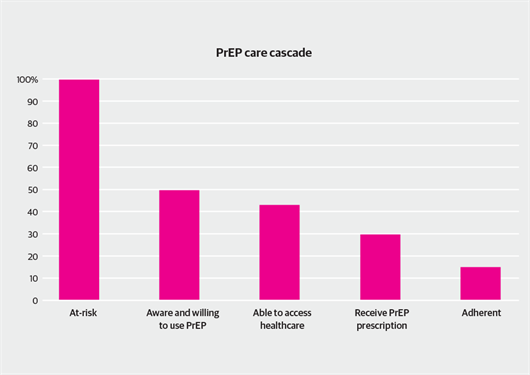
The uptake of PrEP in people who need it risks being limited due to low levels of awareness, gaps in health insurance, opaque bureaucratic procedures, under-usage of medical services, and limited awareness and skills in healthcare providers, according to an analysis published online ahead of print in Clinical Infectious Diseases. Also taking into account sub-optimal adherence among some PrEP users, the researchers conclude that just 15% of gay men in the American city of Atlanta who could benefit are likely to achieve protection from HIV with PrEP.

The PrEP care cascade

Colleen Kelley and colleagues at Emory University outline a ‘care cascade’ or ‘continuum of care’ for PrEP which identifies the key steps in the process of getting hold of PrEP and using it effectively. Analysis of the care cascade can help focus attention on where there are significant barriers to a person moving on to the next step.

Continue reading.

Exactly zero men on PrEP contract HIV in 2.5-year study


From hivplusmag.com…

Zero men on PrEP get HIV new study findsAfter two and a half years of trials, a new study has found no new HIV infections among a group of people on pre-exposure prophylaxis (PrEP). For 32 months, researchers at the Kaiser Permanente Medical Center in San Francisco tracked the health of over 600 people as they used Truvada daily to prevent the virus in a real-world setting.

The average age of the study participants was 37, and 99 percent were men who have sex with men. The average length of individual usage was 7.2 months. Members of this group also reported a higher likelihood of having multiple sex partners than those not using PrEP. No one in the study contracted HIV.

Lead author Jonathan Volk, a physician at Kaiser Permanente San Francisco, emphasized that this is the first time such a study has been done in a clinical practice setting at this size. The findings were published Wednesday in Clinical Infectious Diseases, a leading journal of studies on infection disease.

Continue reading.

The medical staff at the Pitt Men’s Study emphasize that PrEP is not a substitute for condoms. It should be used in addition to condoms, to further reduce your risk. It is also important to note that PrEP doesn’t protect against other STDs like syphilis, chlamydia, and gonorrhea. To learn more about PrEP, check out the CDC’s Website. If you have questions about PrEP, you can speak to your doctor. You can also call the PrEP clinic at the University of Pittsburgh Medical Center: (412) 647-0996.

Few gay teenage boys get tested for HIV

From Medicalpress.com

Few gay teens tested for HIVThe greatest barriers to these teenage males getting tested are not knowing where to go to get an HIV test, worries about being recognized at a testing site and—to a lesser degree—thinking they are invincible and won’t get infected.

“Understanding the barriers to testing provides critical information for intervening, so we can help young men get tested,” said study first author Gregory Phillips II, a research assistant professor of medical social sciences at Northwestern University Feinberg School of Medicine and an investigator for the IMPACT LGBT Health and Development Program at Feinberg.

“Rates of new HIV infections continue to increase among young gay and bisexual men,” said Brian Mustanski, principal investigator of the study, an associate professor of medical social sciences at Feinberg and director of IMPACT. “Testing is critical because it can help those who are positive receive lifesaving medical care. Effective treatment can also help prevent them from transmitting the virus to others.”

The study will be published Aug. 26 in the Journal of Adolescent Health. Continue reading.

HIV prevention pill a tough sell among Latinos

From NPR.org

“It hasn’t really hit the Latino community yet,” Jesse Hinostroza, an HIV prevention specialist with AltaMed health clinics, says while sitting at a table with a bowl of condoms and a stack of bilingual pamphlets about the pill. “They aren’t educated about it.” In California, New York, Texas and elsewhere, health workers are trying to get more high-risk Latino men to use the drug, Truvada. AltaMed’s efforts are being paid for by Gilead, the pharmaceutical company that makes Truvada.

The medication, which is used for “pre-exposure prophylaxis,” or PrEP, was approved by the FDA in 2012 for HIV prevention and has been shown to be more than 90 percent effective when used correctly. But health workers are encountering barriers among Latinos. Those barriers include a lack of knowledge about the drug, and the stigmas attached to sleeping with men and to perceived promiscuity. Many Latinos also have concerns about costs and side effects.

Read the full article.

Updated HIV/AIDS strategy and amfAR releases report

From OUT online

Last week the White House released the National HIV/AIDS Strategy for the United States updated through the year 2020. It’s vision statement read: “The United States will become a place where new HIV infections are rare, and when they do occur, every person, regardless of age, gender, race/ethnicity, sexual orientation, gender identity, or socio-economic circumstance, will have unfettered access to high quality, life-extending care, free from stigma and discrimination.”

The five-year plan discusses steps that are necessary to take across different facets of the HIV/AIDS topic, including reducing new HIV infections, increasing access to care for those infected and improving health outcomes for them, reducing HIV-related disparities and health inequities, and achieving a more coordinated national response to the HIV epidemic.

To accompany the strategy, the American Foundation for AIDS Research released a report commending the amount of coordinated efforts to tackle the HIV/AIDS epidemic on the federal level, but admits that to be successful, the same thing has to happen on a state level.

The foundation gave recommendations for the states so they can improve their HIV prevention and care, and align with the vision set out by the national strategy. “The burden of HIV, and the responses to it, varies across states due to a number of social, political, and economic factors,” said Jeffrey S. Crowley, Program Director of the National HIV/AIDS Initiative at the O’Neill Institute for National and Global Health Law in a release. “But we have found that if states focus on a handful of priority action steps and implement them successfully, they can begin to close critical gaps and dramatically accelerate progress toward ending their HIV epidemics.”

Continue reading.

HIV PEP with emtricitabine/tenofovir/rilpivirine has excellent completion and adherence rates

From aidsmap.com

Daily post-exposure prophylaxis (PEP) with single tablet emtricitabine/tenofovir/rilpivirine (Complera, Eviplera) has excellent completion rates and good side-effect and safety profiles, Australian investigators report in the online edition of Clinical Infectious Diseases.

The open-label, non-randomised study involved 100 men who have sex with men (MSM) requiring PEP after possible sexual exposure to HIV. Treatment lasted 28 days and was completed by 92% of participants. Side-effects were mild, the most common being nausea and tiredness. There were no serious adverse events.

Prompt PEP, after possible sexual or occupational exposure to HIV, can reduce the risk of infection. Guidelines recommend triple-drug therapy, ideally commenced within 72 hours of exposure. Failure of PEP has been linked to poor treatment adherence or the premature discontinuation of treatment. A recent analysis of 97 PEP studies found that only 57% of patients completed their four-week course of treatment.

The combination pill emtricitabine/tenofovir/rilpivirine provides well tolerated and easy-to-take once-daily HIV therapy. Though it must be taken with food, investigators from Australia hypothesised that the combination pill would provide convenient and safe PEP.

Continue reading.

Black market for Truvada PrEP may undermine treatment adherence in marginalised people living with HIV

From aidsmap.com

The increasing demand for pre-exposure prophylaxis (PrEP) is likely to increase the likelihood that some marginalised individuals living with HIV sell some of their prescribed medication to pill brokers and drug dealers, according to a study presented to the Conference of the Association for the Social Sciences and Humanities in HIV in Stellenbosch, South Africa last week.

Steven Kurtz told the conference that several reports have documented street markets for diverted antiretrovirals (ARVs) in the United States. His own research focuses on south Florida, where he recruited 147 HIV-positive men who have sex with men (MSM) who regularly use cocaine, crack or heroin. He purposively sampled (over-recruited) individuals who had sold or traded their antiretrovirals, so that he could better understand the factors associated with doing so.

Economic vulnerability is the key explanation. Within this sample, men who had recently sold ARVs were more likely to have an income below $1000 a month, to have traded sex for money or drugs and to be dependent on drugs. Age, race and education were not relevant factors. Unsurprisingly, men who had sold their HIV treatment had poor levels of adherence to it.

Continue reading on aidsmap.com.

Study links homophobia with gay and bisexual men not seeking HIV-prevention and testing services

From hcplive.com

A Yale University study of 38 European countries’ attitudes about homosexuality has uncovered homophobia was associated with gay and bisexual men not seeking HIV-prevention services, HIV testing, and disclosing their orientation to doctors.   The authors believed their study highlighted a dangerous trend: One where men who live in more homophobic countries were not only becoming less knowledgeable about HIV treatment, prevention, and resources, but also that this demographic seemingly had more opportunities for sexual activity through “hook-up” mobile applications and websites, a Yale University statement pointed out.

For their study published in the June 19 issue of AIDS, investigators used data from the European MSM Internet Survey (EMIS), a questionnaire that delved into gay and bisexual participants’ HIV-related knowledge, behaviors, and healthcare use.

Continue reading on hcplive.com.

AIDSVu releases updated interactive online maps

map2

Click on the map to go to AIDSVu interactive online maps

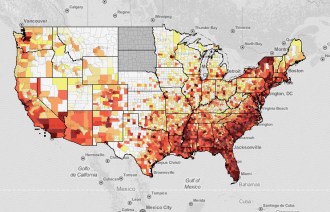
AIDSVu releases its annual interactive online maps that show HIV prevalence data for 34 highly-impacted U.S. cities, including for the first time Birmingham, AL, updated state- and county-level prevalence data, and year-by-year new diagnosis data for 2008 to 2013. HIV testing and treatment locator maps include, for the first time, housing opportunities for persons with AIDS, and also show NIH-funded HIV prevention, vaccine and treatment trials locations.


HIV testing ad causes controversy

From OUT.com

An ad for FreeHIVTest.net that appeared earlier this spring has caused controversy in Los Angeles, San Francisco, and other areas where it has appeared on billboards and on public transportation kiosks. In the “white” version, the AIDS Healthcare Foundation’s ad features a gay couple in bed, covered only by a sheet and looking ashamed of what they’ve just done. A blond man clutches his pillow and looks suspiciously over the shoulder of the other man who appears to be almost catatonic. Above them, written in big letters is, “Trust Him?”


trusthim_gayaa_1094x335After the campaign launched this spring in Los Angeles, it’s been slated to appear in Oakland, California; Washington, D.C.; Columbus, Ohio; and Broward County, Florida. In a press release, AHF president Michael Weinstein explained:

“In today’s tabloid culture when it can seem that the game called ‘Life’ should be more appropriately tiled ‘Lies,’ the old adage holds true now more than ever, ‘It’s better to be safe than sorry.’ While infidelity is nothing new, the level of risk in contracting STDS from bed-hopping partners is at an all-time high. We want to remind couples that STDs linger around much longer than a wandering eye and that secret sexual experiences can often produce much more than what one bargained for.”

For some, it’s just a cautionary PSA about the realities of HIV and the importance of getting tested. For others, it’s been seen as a scare tactic to shame people out of having sex and demonize people with HIV — and many have spoofed the ads.

Continue reading.

New site answers your questions: “What is PrEP?”

From whatisprep.org

PrEP means Pre-Exposure Prophylaxis, and it’s the use of anti-HIV medication that keeps HIV negative people from becoming infected. PrEP is approved by the FDA and has been shown to be safe and effective. A single pill taken once daily, it is highly effective against HIV when taken every day. The medication interferes with HIV’s ability to copy itself in your body after you’ve been exposed. This prevents it from establishing an infection and making you sick.

Even though PrEP has been around in the U.S. for over a year, not a lot of people know about it. And, even fewer people feel like they know enough about it to be able to make an informed decision about whether or not to use it. For those who do use it, the information they have might be more focused on practical issues, like where to get it, rather than on what PrEP does in the body to prevent HIV infection.

By using animation to show PrEP in the body and why “once a day” is recommended, people can see what PrEP does and people who currently use PrEP can create an image of what happens when they take a PrEP pill every day.

View the video below to get information about PrEP and see an illustration of how it can work inside the body to prevent HIV infection.

Learn More About PrEP

See CDC 2014 Clinical Practice Guidelines at http://www.cdc.gov/hiv/pdf/PrEPguidelines2014.pdf

AIDS.gov – PrEP information page (aids.gov/hiv-aids-basics/prevention/reduce-your-risk/pre-exposure-prophylaxis)

AIDSinfoNet – Reliable, Up-To-Date Treatment Information(aidsinfonet.org/fact_sheets/view/160)

AVAC – Global Advocacy for HIV Prevention (avac.org/ht/d/sp/i/262/pid/262)

Avert – AVERTing HIV and AIDS (avert.org/pre-exposure-prophylaxis.htm)

CDC – Questions and Answers from the U.S Centers for Disease Control and Prevention (cdc.gov/hiv/prevention/research/prep)

My PrEP Experience – Real stories from real people who adopted PrEP for prevention in the US (myprepexperience.blogspot.com)

PrEP Facts – San Francisco AIDS Foundation PrEP information in visual format for MSM and heterosexual individuals, with an option for Spanish(prepfacts.org)

PrEP Watch – Interactive webpage with information and resources on gaining access to PrEP (prepwatch.org)

PrEParing for HIV – An Epidemic Interventions Initiative by the University of California

Project Inform – Videos, publications and resources (projectinform.com/prep)

SFHIV – City and County of San Francisco Department of Public Health’s PrEP information page (sfhiv.org/resources/prep)

Guidance for Use of PrEP in Practice and Research Settings

WHO – World Health Organization (who.int/hiv/pub/guidance_prep/en)

CDC – Downloadable PDF from the Centers for Disease Control and Prevention (cdc.gov/nchhstp/newsroom/docs/CDC-Interim-PrEP-Guidance-012811.pdf)

Human Rights Campaign (HRC) publishes updated guide to practicing safer sex

Press release from the HRC

The Human Rights Campaign (HRC) Foundation, in collaboration with Whitman-Walker Heath (WWH), released an updated guide to practicing safer sex that includes essential tips to minimize the spread of HIV and other sexually transmitted infections (STIs).

The guide, “Safer Sex,” an updated version of the first edition released five years ago, is written for people of all sexual orientations and gender identities, covering topics ranging from basic facts about HIV and STIs, and the importance of practicing safer sex, to the role of new HIV prevention regimens including Pre-Exposure Prophylaxis, or “PrEP.”

The pocket-sized publication is the latest collaboration between the HRC Foundation and WWH, building on their shared commitment to securing the health and well-being of LGBT people in the nation’s capital and beyond.

“It’s a fact that many LGBT people don’t see themselves, or their relationships, discussed in mainstream sexual health resources,” said Jay Brown, the HRC Foundation’s Director of Research and Public Education. “With rates of HIV and other sexually transmitted infections on the rise among young people and in communities of color, HRC and Whitman-Walker remain committed to providing crucial health and wellness information in a way that is medically accurate, culturally competent, and judgement-free.”

Read more on the HRC Website.

HIV risk among young gay, bi men tied to societal issues

From Reuters Health

Participants were recruited from the New York City area between 2009 and 2011 and were 18 or 19 when they entered the study. At that point they were all HIV-negative. Over the next three years, 43 participants became infected with HIV. About a third of black, Hispanic and mixed or other race participants became HIV-positive during the study, compared to about 7 percent of white participants. People who described themselves as being in low to average social and economic groups were more likely to become HIV-positive than those in higher socioeconomic groups.

Also, the authors found, young age at first sexual experience with another male was tied to an increased risk of becoming HIV-positive, compared to a first encounter at an older age. “The bigger point here is that it’s just too simplistic to (blame) everything on race,” Halkitis said. “We’re trying to get at the reason that’s happening. This paper starts to point to it.”

The researchers point out that social and economic status is closely tied to race in the U.S. People with lower social and economic status likely live in areas with more poverty, less access to healthcare and more untreated sexually transmitted infections (STI), they write. They also point out that young gay and bisexual men may not be properly educated about STIs, and their heterosexual parents may not be equipped to educate on those topics.

“I think that one way we can begin to address this issue is through comprehensive sexual health education,” said Jason Coleman, an expert on HIV and STI prevention at the University of Nebraska-Omaha.

Read the full article.

Social apps back in the news after Rhode Island study notes alarming rise of STDs

From Latinos Health

In the report by the Rhode Island Department of Health, researchers highlighted the alarming rise of STD’s in the state between 2013 and 2014, with HIV infections up by 33 percent, gonorrhea up 30 percent, and syphilis rising an alarming 79 percent.

“New cases of HIV and syphilis continued to increase among gay, bisexual, and other men who have sex with men at a faster rate than in other populations,” the report noted, adding that “infection rates of all STDs continued to have a greater impact on the African-American, Hispanic, and young adult populations.”

While better testing partly explains the increase, health officials also highlighted “high-risk behaviors that have become more common in recent years,” such as “using social media to arrange casual and often anonymous sexual encounters.”

Read the full article.

H.I.V. treatment should start at diagnosis, U.S. health officials say

From the New York Times

People with H.I.V. should be put on antiretroviral drugs as soon as they learn they are infected, federal health officials said Wednesday as they announced that they were halting the largest ever clinical trial of early treatment because its benefits were already so clear.

The study was stopped more than a year early because preliminary data already showed that those who got treatment immediately were 53 percent less likely to die during the trial or develop AIDS or a serious illness than those who waited.

The study is strong evidence that early treatment saves more lives, the officials said. Fewer than 14 million of the estimated 35 million people infected with H.I.V. around the world are on treatment now, according to U.N.AIDS, the United Nations AIDS-fighting agency. In the United States, only about 450,000 of the estimated 1.2 million with H.I.V. are on treatment, according to the Centers for Disease Control and Prevention.

“This is another incentive to seek out testing and start therapy early, because you will benefit,” said Dr. Anthony S. Fauci, director of the National Institute for Allergy and Infectious Disease, which sponsored the trial. “The sooner, the better.”

Continue reading on the New York Times.

CDC dedicates $185M to prevent HIV among trans and MSM

From edgeboston.com

The U.S. Centers for Disease Control (CDC) recently announced $185 million in funding for three new programs to prevent HIV infection among transgender people and gay, bisexual, and other men who have sex with men (MSM), with a particular focus on MSM of color.

The programs are part of a multi-pronged strategy to address the disproportionally heavy burden of HIV infection on MSM and transgender men and women. These programs will help health departments and local HIV prevention partners deliver and apply the most effective HIV prevention tools.

In particular, CDC plans to award up to $125 million over a three-year period to state and local health departments to expand the use of: 1) pre-exposure prophylaxis (PrEP) for uninfected MSM and transgender people who are considered at substantial risk for HIV infection; and 2) ongoing medical care and antiretroviral treatment for people already living with HIV. Health departments will be funded to provide PrEP information and referrals and to conduct outreach and training to increase the number of healthcare providers who are knowledgeable about PrEP and offer it to their patients.

Backlash to New York City’s fear-based HIV prevention campaign

From aidsmeds.com

The New York City Department of Health and Mental Hygiene’s recent fear-based HIV prevention campaign may have led to unintended consequences by stigmatizing young black and Latino men who have sex with men (MSM). Publishing their findings in Health Affairs, researchers analyzed the 2010 “It’s Never Just HIV” campaign, which used fearful, horror-movie-like imagery and messaging to highlight health problems tied to HIV or its treatment, such as osteoporosis, dementia and anal cancer.

“Relying on fear is risky business,” the authors write in the paper. The health department came to appreciate that its analysis of the campaign’s success could not be governed simply by HIV rates among the target population. Rather, the department needed to consider the campaign’s social and political impact. Not only was there a huge amount of controversy among people in the HIV community, but according to certain criticisms, people at risk of HIV and those living with the virus may have suffered stigma as a result of the campaign.

New York City has since moved away from fear-based HIV prevention campaigns. For example, “Be HIV Sure,” which launched on World AIDS Day 2014, encourages HIV testing as part of sexual intimacy.

To read a press release on the study, click here.

People who don’t tell anyone else their HIV status have as good health outcomes as other people living with HIV

From aidsmap.com

[D]oes non-disclosure matter? Is it associated with poorer health outcomes? While a quantitative survey, completed on a single occasion by respondents, has some limitations in terms of the insight it can give into the quality of people’s lives and relationships, these data are reassuring.

Mental health difficulties and adherence problems were quite common among survey respondents. But they weren’t more frequently reported by people who hadn’t disclosed to anyone. After statistical adjustment for other factors that could skew the results, rates of the following were very similar in people who disclosed and people who did not:

  • Low social support.
  • Symptoms of depression.
  • Symptoms of anxiety.
  • Problems with adherence to HIV treatment.
  • A detectable viral load.

In fact, some of the data suggested that having disclosed to most or all friends and family was actually associated with poorer outcomes in gay men. A more selective disclosure strategy was associated with better outcomes.

Read the full article on aidsmap.com.