Activists campaign for better access to HIV “morning after pill”

From the Guardian.com

Two years ago, James Krellenstein had unprotected sex. Luckily, the 22-year-old knew exactly what to do. The next day, he took a train from his parents’ house on Long Island to see a doctor at Bellevue Hospital inNew York City. The doctor prescribed James PEP – a strong combination of drugs usually prescribed for people who already have HIV. Months later, Krellenstein found out his partner from that night was indeed HIV-positive. But James remained negative. PEP’s little-known effectiveness in preventing the virus taking hold in someone’s body has led it to be dubbed the “morning-after pill for HIV”.

Yet Krellenstein’s experience remains rare. While the idea of treating people who may have been exposed to HIV with PEP has gained ground among doctors and activists over the last few years, most local governments in the United States have yet to implement a comprehensive PEP distribution or education program. That’s left many who are most at risk from contracting HIV unaware the option even exists. Now, as HIV diagnoses continue to rise among gay men, activists and experts are urging governments to invest money in PEP awareness campaigns and treatment programs. Otherwise, they say, many communities might be heading for a new HIV and AIDS crisis in coming years.

“We’re going to have to deal with [HIV] one way or another,” said Krellenstein, a member of the HIV awareness and activism group Act Up. “And I’d rather do it on the prevention side rather than waiting for everyone to be positive.” Krellenstein’s concern about “everyone” contracting HIV may sound like hyperbole. But if current infection rate trends continue, 54% of all men who have sex with men (MSM) will have HIV by the time they are 50, according to a 2009 University of Pittsburgh study. Among African American men who have sex with men, half will have HIV by the time they are 35. And while contracting HIV is no longer a death sentence, many worry that the increasing incidence of infection will burden the already-strained US healthcare system. The lifetime cost of treating someone with HIV can reach over $1m.

Those staggering numbers are what’s led groups like Act Up to campaign for increased funding for PEP, and increased awareness within the gay community. Act Up’s involvement is notable. The group made a name for itself pushing for politicians to take the HIV crisis seriously in the 1980s. But as treatment for HIV improved, gay marriage and other social issues replaced health at the forefront of the LGBT rights movement, and Act Up faded from view. Now, the group has found renewed purpose in calling notice to the increasing prevalence of HIV and the lack of funding for unorthodox solutions like PEP. While no one in Act Up thinks PEP is a cure-all in the ongoing fight to stop the spread of HIV, many believe it’s a missing piece in comprehensive “prevention pipeline” that includes condoms, regular testing, and education.

“A lot of young gay guys, even well-informed ones, don’t know a lot about HIV,” said Jim Eigo, an activist with Act Up who also petitioned governments to take action on HIV in the 1980s. “We’ve got to open up the eyes of the gay community … and say if you’re HIV-negative, there’s an individual value and a community value in staying that way.”

Continue reading the full article here.

Today is National HIV/AIDS and Aging Awareness Day

Today is National HIV/AIDS and Aging Awareness Day (NHAAAD). This year’s theme for NHAAAD is Aging is a part of life: HIV doesn’t have to be.

Whether you are 50+ and living with HIV yourself, or you are taking care of someone older who does, NHAAAD provides an opportunity to bring attention to the complex issues of HIV and aging, and to take action.

Here are three ways you can recognize NHAAAD:

Know Your HIV Status

Share the Facts

Join the Conversation

Want to be a part of today’s dialog on HIV and aging? All you have to do is follow or tweet with the hashtag #NHAAAD Exit Disclaimer on Twitter, post a message on Facebook, or comment on this blog post or other AIDS.gov posts. We want to hear about your plans to observe NHAAAD!

Find out more at AIDS.gov.

Men can use a female condom for anal sex

From the Pacific Standard online…

fc2-condom-290x290“We see sexy commercials for Trojan. We see sexy commercials for Durex,” says Jennifer Medina Matsuki, condom availability director for the New York City Department of Health and Mental Hygiene, addressing a breakout session on FC2, the new female condom, at the National Harm Reduction Conference in October. “There was no sexy marketing. People would see it at various events and say, ‘What is that?’”

FC2 was approved by the Food and Drug Administration in 2009, and bears considerable advantages over both its predecessor and male condoms—namely, they put more power in the hands of the receptive sex partner and feel better than the first female condom, also lacking its trademark rattling sound—but is still a minor player in the world of safer sex.

Matsuki’s department started stocking the first female condom in 1998, seven years after its introduction, and now buys 1.5 million female condoms per year, compared to 35.5 million male condoms. Worldwide, FC2s account for just 1.6 percent of total condom distribution. So far, there’s just one manufacturer, as opposed to the dozens of male condom manufacturers, though other companies—such as Origami, which is working on insertable condoms for both anal and vaginal sex—have devices in development. Where FC1 was advertised aggressively in women’s magazines—only to be mocked in the same publications as a noisy, awkward novelty—FC2 has been sold via social media and gatekeepers at public health organizations. But it’s yet to shrug off FC1′s bad rap.

Read the full article here.  You can find out how to use a female condom in this YouTube video.

Facebook chats help minority men get tested for HIV

From opb.org online…

It didn’t take long for people to figure out that Facebook could be a great place to connect with other people dealing with the same health problems. But public health officials have moved cautiously, lest their efforts backfire. Do you really want to “like” STDs?

But there is now evidence the social media approach can help, even when the health condition is sensitive. Facebook can play a role in persuading people at high risk of HIV/AIDS to use a home HIV test kit, a study finds.

To reach young gay Latino and African-American men, researchers at the David Geffen School of Medicine and School of Public health at the UCLA trained men in the same demographic as peer leaders, giving them information on how HIV spreads. That’s a time-honored public health technique. They also created a comparison group, with peer leaders trained to share general health information.

The peer leaders then tried to communicate on Facebook with men who had volunteered to participate in a study. Because there are no best practices for using social media to communicate health information, the peer leaders had to make it up as they went along. First, they tried a friendly message and then some social chat, with messages tailored to the participants’ interests. Then they invited participants to join either a closed Facebook group with information on HIV prevention, or if they were in the control group, on general health.

For their part, the participants, who were recruited through Facebook and community organizations, were told to use Facebook as they normally would. Most interacted with the peer leaders, a fact that the study authors say reflects the fact that African-Americans and Latinos are more likely to use social networking sites than the general population.

Read the full article here.

Luzerne County lawmaker proposes ban on gay conversion therapy

From the Times-Tribune online…

youth holding handsHARRISBURG – Mental health providers would be prohibited from counseling gay and lesbian youths to change their sexual orientation under a bill being introduced by a Luzerne County lawmaker.

Reps. Gerald Mullery, D-119, Newport Twp., and Brian Sims, D-182, Philadelphia, are seeking to ban this type of therapy for patients under age 18. They cite the precedent of a new law in New Jersey signed last week by Gov. Chris Christie. Citing studies by the American Psychological Association, Mr. Mullery said he considers sexual orientation conversion therapy to be harmful to children and causing some to even have suicidal thoughts. Conversion therapy is described as counseling and psychotherapy attempting to eliminate or suppress homosexuality. “They (patients) are being asked to change who they are,” said Mr. Mullery. “I view it like mental bullying.”

In a legislative memo, Mr. Mullery and Mr. Sims said youth need to be protected from the harm caused by sexual orientation change efforts. “Studies have concluded that there is insufficient evidence that sexual orientation change efforts are effective for changing sexual orientation, and that such efforts could result in damaging long-term effects for minors,” the lawmakers said. “Therefore, like any other harmful act that is prohibited by Pennsylvania law, we must protect Pennsylvania’s youth from sexual orientation change efforts.”

Mr. Mullery said he started researching the issue after becoming aware of the legislation moving to passage in New Jersey and Mr. Christie’s support for it. The lawmaker said he hopes Mr. Christie’s action will motivate Republican state lawmakers in Harrisburg to join as bill cosponsors.

New Jersey’s law bans state-licensed counselors, therapists and social workers from practicing conversion therapy.


A statement in solidarity with queer youth from ACT UP / New York

actup-bannerFrom ACT UP New York

How to Declare War on the New HIV Epidemic?

The AIDS Coalition to Unleash Power (ACT UP) marched through cheering crowds at the historic New York City Pride Parade on June 30th, 2013, to declare an HIV prevention emergency that threatens the health of the young queer community. More than half of young gay and bisexual men and transgender women may become HIV-positive by age 50, unless we act now, according to projections based on the latest statistics from the U.S. Centers for Disease Control and Prevention (CDC).

With this statement, ACT UP is issuing a non-violent declaration of war against the new HIV epidemic — AIDS 2.0 — and all of the institutions and organizations that do not mobilize to fight this second epidemic hitting our communities. We will take to the streets; we will work with government agencies to improve HIV prevention programs; we will target federal, state and city cuts to HIV prevention funding; we will research and distribute the latest safe sex and medical information in schools; we will call out ineffective sex education programs; we will target major media, entertainment and LGBT organizations that have disengaged from the AIDS fight; we will not be silent.

Read the full statement on TheBody.com.

“If I Am HIV-Negative, Then You Must Be Too, Right?”

From  writing for the Huffington Post Blog…

Falling in love is never easy, but forming a lasting relationship can be even more difficult. For many the early stages of a romance are a combination of excitement, panic and the urge to vomit, a constellation of feelings that Hallmark conveniently labels as “love.” But as relationships develop, a myriad of questions begin to arise: Will his mother like me? Does he always whistle when he pees? Will he judge me for watching Here Comes Honey Boo-Boo? Over 30 years into the HIV epidemic, the relationships formed by gay men and other men who have sex with men (MSM) often face another set of questions: Is he HIV-positive or negative? Is he going to ask if I am positive or negative? True, 30 years of HIV prevention efforts and advocacy have enabled many men living with HIV to be open about their HIV status, and it is certainly true that discussions around HIV are far less stigmatized than they were in the 1980s. But while we have been inundated with messages telling us to “talk about HIV with your sex partners,” for some such discussions are fraught with anxieties over blame, judgment or abandonment.

But for others, the lack of discussion around HIV with their sex partners may arise from a surprising gap in knowledge. Recently published work by Bradley Wagenaar and colleagues from the Rollins School of Public Health in Atlanta shows that among a sample of 426 MSM aged 18 to 29, 21 percent were not definitively aware that sero-discordance (where one member of the couple is HIV-negative and the other is HIV-positive) is possible. That is, 1 in 5 men surveyed thought that if two men were having sex and one was HIV-negative, then the other must also be HIV-negative. This new evidence suggests that gay men may make assumptions about their partner’s sero-status using their own HIV status as a barometer against which to guesstimate their partner’s HIV status. And the logic perhaps makes sense: If I know I am negative, and we have been having a lot of sex together, then he must be negative too, right?

Continue reading on the Huffington Post Gay Voices.

Rob Stephenson is a Public Voices Fellow with The OpEd Project. He is also an Associate Professor of Global Health at Emory University and an expert in HIV and sexual behavior among gay men.

Activist: AIDS is gay again

From , writer and activist, posted on the Huffington Post Gay Voices…

Between 2008 and 2010, new infections rose 12-percent for gay men while falling or remaining stable in all other populations. Transmission for young gay men spiked upwards 22 percent. MSM faced 30 times the HIV risk that straight guys faced. A gay African-American man was six times likelier to be infected with HIV than a white gay man, and a Hispanic man was three times likelier. Researcher Ron Stall’s 2009 prediction that more than half of young gay men would be HIV-positive by age 50 suddenly seemed a chilling underestimate.

In the early 1980s, faced with seeming extinction, gay men invented safer sex. Supported by pamphlets, videotapes and workshops, promulgated across gay sexual networks, safer sex emphasized lower-risk sex acts and using condoms for high-risk anal sex. Empowered to take control of their lives in the face of a deadly virus, gay guys drove HIV incidence down by 75 percent between 1984 and 1993. Believing that safer sex was all the prevention we’d ever need, we who were AIDS activists never fought for prevention research or the development of new prevention tools. We focused on securing treatments for the sick and potentially sick.

But we were wrong to think the original community consensus behind safer sex could survive an evolving epidemic. As early as 1993, even as AIDS deaths mounted, HIV incidence for gay men began a slow upward drift. Combination antiretroviral therapy, introduced in 1997, would make HIV a manageable disease for most who received treatment. The term “barebacking” came into use to refer to a conscious decision to discard condoms, at first an exceptional position that soon spread. Most ongoing prevention programs, unequal to the new epidemic, simply tinkered with the safer sex workshops of an earlier generation. A slow rise in HIV incidence for gay guys continued until the recent acceleration captured in the latest incidence report.

Read the full article on the Huffington Post.

Facing AIDS theme of National HIV Testing Day

From AIDS.gov

Facing AIDS is a digital photo sharing initiative with the goal of reducing HIV-related stigma and promoting HIV testing. Many AIDS.gov blog readers have contributed personal messages to the Facing AIDS photo gallery, most recently in recognition of World AIDS Day (December 1, 2012 – visit the gallery to see the inspiring messages collected over the five years of the initiative). Many of your Facing AIDS messages highlight the importance of confronting stigma and echo the theme of National HIV Testing Day: Take the Test. Take Control. That consistency made it easy for our team to re-purpose the photos into the newest video in our Facing AIDS series. To learn how participate in Facing AIDS, read this blog post. To watch other videos in the Facing AIDS series, please use this playlist Exit Disclaimer. Click here to learn more about locating HIV testing near you. Please watch and share the “Facing AIDS for National HIV Testing Day” video.

Huffington Post blog addresses HIV stigma

The HIV Shame Game: What Role Do You Play?

 – Freelance columnist and fiction writer; creator, The Needle Prick Project

[…] According to the Center for Disease Control, 44 percent of people who are HIV positive are unaware of their status. Unfortunately, the people who may be perpetuating the shame game may soon find that it is they who need the bath. This is where the real danger lies. Allowing language like this to permeate our culture only serves to promote the continuation of the HIV epidemic and enforce a second viral class among the gay community.

Of course, the burden of change rests on the shoulders of those affected the most by the shame game. It may seem easier for HIV-positive men to retreat into the shadows when friends and strangers alike unknowingly use language that make them feel like a pariah in dignitaries’ clothing. However, many of these accidental offenders are victim of the same phenomenon that was the basis of so much prejudice against gay men and women. They simply don’t have a personal connection to the disease. HIV-positive men owe it to themselves to speak out against language that demeans their worth. They also owe it to their HIV-negative friends to educate them on the reality so that they don’t continue to proliferate stigma or believe that they are removed from risk.

HIV-positive men aren’t victims, vampires, zombies or martyrs. The social and psychological factors surrounding infection are complex, difficult and impossible to simplify into one category.

Of course, the language we use and terminology we’ve chosen to isolate one another is just the one element of the shaming that goes on within the gay community. Combating HIV stigma is a multifarious problem that will require numerous endeavors and will take time before we start seeing measurable change.

Read the full post on The Huffington Post Blog.

Health Alert – meningococcal meningitis

From the Pitt Men’s Study

You may have heard about the recent cases of bacterial meningitis among gay men in in New York and LA County.  Meningitis is an inflammation of the membranes surrounding your brain and spinal cord. The swelling associated with meningitis often triggers the “hallmark” signs and symptoms of this condition, including headache, fever and a stiff neck.

Most cases of meningitis in the U.S. are caused by a viral infection, but bacterial and fungal infections can also cause the disease.  The recent cases of meningitis in New York and LA County were caused by a bacteria called meningococcus.  This bacteria can spread through intimate contact such as sharing eating utensils, kissing, and close physical contact (including all forms of sex, of course).

Viral infections usually get better on their own.  However, bacterial infections require immediate medical treatment with antibiotics and can result in serious illness and death. It is also worth noting that persons with immune system deficiencies are particularly susceptible to the disease.

Initially, meningitis symptoms may resemble the flu, with worsening headache, vomiting, and a sudden high fever (over 101.3). People may also often develop neck stiffness and sensitivity to light.  If left untreated, people often progress to confusion, coma, and ultimately death.

There are vaccinations to prevent the deadly forms of meningitis and the Pitt Men’s Study recommends that if you are traveling to New York City or Los Angeles, and plan to be in close quarters with other gay men, you might want to consider getting vaccinated with the meningococcal vaccination.

For more information about meningitis, visit the Centers for Disease Control and Prevention Website:
http://www.cdc.gov/meningitis/bacterial.html

For more information about the recent outbreak of meningitis among gay men in New York and LA County, go to:http://www.nytimes.com/2013/05/19/health/for-gay-men-a-fear-that-feels-familiar.html

Researchers investigate use of PrEP and risk-taking among men who have sex with men

From U.S. Centers for Disease Control and Prevention (posted on TheBody.com)

Truvada (tenofovir) is used for pre-exposure prophylaxis (PrEP) to reduce risk of HIV infection among risk-taking HIV-negative gay men. Researchers investigated whether use of Truvada as PrEP encouraged risk-taking among men who have sex with men (MSM). The researchers studied 400 gay men for 24 months between 2005 and 2007 in a randomized double-blind placebo study. One group of participants began taking Truvada at the outset of the study and the other began nine months later. Researchers interviewed the men at entry into the study and every three months concerning sexual risk-taking and use of recreational drugs and erectile dysfunction medications.

Participants had an average of 7.25 partners in the three months prior to the study. This number decreased to 6 partners between months 3 and 9 and to 5.71 in the second year. Before baseline, 57 percent of participants reported unprotected anal sex. The number dropped to 48 percent between months 3 and 9, and rose to 52 percent in the second year. Also, at baseline, 29 percent of participants reported unprotected intercourse with a man they knew to be HIV-positive. This number dropped to 21 percent between months 3 and 9 and increased slightly to 22 percent in the second year. Unprotected sex with partners they knew to be HIV-positive decreased from 2 at the beginning of the study to 1.37 during the second year, and unprotected anal intercourse with partners believed to be HIV-negative increased from 2.75 at baseline to 4 during year two.

Findings indicate that the use of Truvada as PrEP did not increase sexual risk-taking among HIV-negative MSM. However, findings are tempered by the fact that the study provided the participants with risk-reduction counseling, condoms and lubricant, routine HIV tests, STD testing, and links to prevention services. The researchers acknowledge that these measures may have affected the observed risk reduction and risk declines.

The full report, “Sexual Risk Behavior Among HIV-Uninfected Men Who Have Sex with Men (MSM) Participating in a Tenofovir Pre-Exposure Prophylaxis (PrEP) Randomized Trial in the United States,” is published online in the Journal of Acquired Immune Deficiency Syndromes.

May is Hepatitis Awareness Month

awarenessmonth_211x205From AIDS.gov

May 1 marks the start of the month-long observance of Hepatitis Awareness Month. The observance is an important element of government-wide efforts to raise awareness about viral hepatitis and decrease health disparities by educating communities about the benefits of viral hepatitis prevention, testing, care, and treatment.

Throughout the month of May, HHS and our partners who support the Action Plan for the Prevention, Care and Treatment of Viral Hepatitis will be engaged in a variety of activities to increase awareness—among the public and healthcare providers—about viral hepatitis, including the importance of testing, the availability of care and treatment, and associated adverse health effects resulting from undiagnosed and untreated viral hepatitis. In the coming weeks, we’ll be sharing several blog posts about implementation of the Action Plan. On May 19, we will observe the second annual Hepatitis Testing Day. Viral hepatitis is the leading cause of liver cancer and the most common reason for liver transplantation in the United States. An estimated 4.4 million Americans are living with chronic hepatitis; most do not know they are infected. This places them at greater risk for severe, even fatal, complications from the disease and increases the likelihood that they will spread the virus to others.

Hepatitis Testing Day was established in the Action Plan as a means to raise awareness and educate health care providers and the public about who should be tested for chronic viral hepatitis. Unfortunately, many communities and populations remain uninformed about various facets of viral hepatitis, including associated adverse health effects, the need for testing and care, and the availability of vaccines (for hepatitis A and hepatitis B) and treatment – especially priority populations at high risk for viral hepatitis, such as injection drug users; people living with HIV; gay, bisexual, and other men who have sex with men; baby boomers (people born between 1945-1965); African Americans; and Asians and Pacific Islanders.

Please join us in promoting both of these important observances—Hepatitis Awareness Month and Hepatitis Testing Day—to enhance public awareness of viral hepatitis prevention, testing, care and treatment across the United States. Here are a few things you can do:

  • Learn more about awareness activities, including testing events, taking place in communities around the country to mark Hepatitis Testing Day. This page from CDC allows people to search for Hepatitis Testing Day events taking place near them in May. Event organizers can also list their events.
  • Review the web badges, digital tools, fact sheets, posters and other resources available from CDC on this page and find one you can use this month.
  • Take this 5-minute online hepatitis risk assessment developed by the CDC and get a personalized report on hepatitis testing and vaccination recommendations.
  • Read more about the Viral Hepatitis Action Plan on our recently updated page.

Won’t you please commit to learning more yourself and/or sharing information about viral hepatitis with at least two other people this month?  Working together, we can raise greater awareness about the epidemic of viral hepatitis in the United States and, in so doing, make great strides in improving the health of persons who are at risk for or living with viral hepatitis.

Task Force calls for every adult to be routinely screened for HIV

From WebMD

New guidelines from the U.S. Preventive Services Task Force call for virtually every adult to be routinely screened for HIV, the virus that causes AIDS.

The updated recommendations, which are published in the April 30 issue of the journal Annals of Internal Medicine, suggest that pregnant women and all people aged 15 to 65 be screened for HIV. The guidelines are now more in line with screening recommendations from the U.S. Centers for Disease Control and Prevention, the American College of Physicians and the American Academy of Pediatrics.

“HIV is a critical public health problem. There are 50,000 new infections in the U.S. each year, and we need to find ways to prevent and treat it,” said guideline author Dr. Douglas Owens, a professor of medicine at Stanford University and a senior investigator at the VA Palo Alto Health Care System, in California.

The guidelines, last updated in 2005, reflect new evidence about the effectiveness of treatment, especially when started early in the course of HIV infection.

“The best way to reduce HIV-related death and disability is to avoid getting infected,” Owens said. “Should someone become infected, we want them to understand that there are very good treatments that will help them live longer and reduce transmission.”

Experts agreed that such blanket screening is the best — and possibly only — way to stop the HIV epidemic in its tracks.

Knowing one’s HIV status is “a first step for both prevention and needed medical services, yet the history of the epidemic has set up barriers such that, in some states, it is still not straightforward to access an HIV test without the need for written consent or a fee,” said Dr. Sten Vermund, director of the Institute for Global Health at Vanderbilt University School of Medicine in Nashville. “Free, regular screening for HIV, much as we try to have regular blood pressure or breast cancer screening, is one of the best ways to start reducing the HIV epidemic in the U.S.”

Read the full article on WebMD.

Latest HIV vaccine doesn’t work; NIH halts study

From Seattlepi.com

The latest bad news in the hunt for an AIDS vaccine: The government halted a large U.S. study on Thursday [April 18, 2013] , saying the experimental shots aren’t preventing HIV infection. Nor did the shots reduce the amount of the AIDS virus in the blood when people who’d been vaccinated later became infected, the National Institutes of Health said.

“It’s disappointing,” said Dr. Anthony Fauci, head of NIH’s National Institute of Allergy and Infectious Diseases. But, “there was important information gained from this” study that will help determine what to try next.

Read more: http://www.seattlepi.com/news/

Gay social app creators give attention to health and social issue

From the Huffington Post

by 

Nowadays there seems to be a mobile app for everything, including dating.

Long before my last breakup, I deleted Grindr, a smartphone app that is a household name in most gay circles, from my phone. Call me old-fashioned, but I wanted to meet people face-to-face. I found it creepy that the application pinpointed my exact location and told perfect strangers how close I was to them, and there was something seedy about texting headless torsos on my little phone’s screen. Even when I was bored, I thought that Grindr simply lacked the kind of fun and sophistication that piqued my interest. Moreover, I had long given up on dating sites such as Adam4Adam, Manhunt and even Gay.com; they’d started to have the feel of a bathhouse or a seedy bar. I decided that there simply was not a market in online dating for those who wanted to meet decent people to chat with.

Was I the last gay man on Earth who did not want to hook up? I was parched for conversation with other gay men. Sure, I have a sexual appetite, but I do draw a line sometime. And then, like a ray of sunshine, a friend suggested that I look into Hornet. “I only have it because I’m bored, but it is pretty awesome and a little like Facebook,” said my friend.

After incredulously scolding my friend for using a what I thought was a gay hookup app while in a relationship, I downloaded it. Incredibly, Hornet was different right off the bat. Not only was the interface user-friendly, but users can literally search the world for someone to talk to and not pay a dime for the service. People were using the app to address social issues like knowing one’s HIV status. I was intrigued.

Read the rest of the article on the Huffingon Post Website.

April 10th is National Youth HIV & AIDS Awareness Day

nyhaadcolorlogoNational Youth HIV & AIDS Awareness Day is a day to educate the public about the impact of HIV and AIDS on young people as well as highlight the amazing work young people are doing across the country to fight the HIV & AIDS epidemic.

Today’s young people are the first generation who have never known a world without HIV and AIDS. In the United States, one in four new HIV infections is among youth ages 13 to 24. Every month 1,000 young people are infected with HIV and over 76,400 young people are currently living with HIV across the country. While there has been much talk about an AIDS-Free Generation, we know that is not possible without our nation’s youth. Young people and their allies are determined to end this epidemic once and for all and this day is a way to acknowledge the great work young people are already engaging in to do so.

National Youth HIV & AIDS Awareness Day will be celebrated all across the country. There will be events hosted by various organizations and individuals in high schools, colleges, churches, community centers and more! There also will be opportunities for online participation.

To find out more about the National Youth HIV & AIDS Awarness Day, check out amplifyyourvoice.org

Screening of “You Are Not Alone” – depression and Black gay men

Not aloneThe Washington, DC Public Library and DBGM present You Are Not Alone. You Are Not Alone is a documentary in which Black gay men are breaking a taboo and speaking out about their depression, how they coped and survived. This event is free and open to public.

When: Saturday, April 20, 2013 at 1:00 PM Where: Martin Luther King Jr. Memorial Library (901 G Street, NW, Washington, DC)

There will be a post-screening Q&A/discussion. To RSVP, please contact Turner Freeman either via phone at 202-727-1295 or via email at turner.freeman@dc.gov

CDC expands Let’s Stop HIV Together campaign™, launches Spanish version

From AIDS.gov

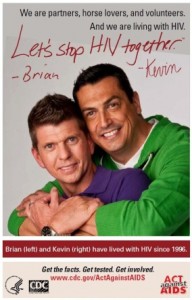
spanish campaignThis month, the Centers for Disease Control and Prevention expanded the national HIV awareness and anti-stigma campaign, Let’s Stop HIV Together, including the launch of a Spanish-language version of the campaign, Detengamos Juntos el VIH. The campaign now includes new participants, more materials in both Spanish and English, and HIV awareness and testing information in Spanish through the new website. Campaign materials are available on the CDC’s Act Against AIDS website. New English materials available on the campaign website include:

  • PSA for TV featuring Jamar Rogers from NBC’s The Voice
  • 4 personal video stories
  • 15 campaign posters
  • Brochure

New Spanish materials on the Spanish-language version of the Act Against AIDS website include:

  • Public Service Announcements (PSAs) for radio and TV
  • 3 personal video stories
  • 12 campaign posters
  • Brochure and palm card