9 FAQs for when your partner has HIV

From Everyday Health

If you’re in a new relationship with someone who has HIV or you’ve recently found out that your longtime partner is HIV positive, you may be experiencing a whirlwind of emotions — possibly fear, sadness, or even anger, depending on the context. You may be concerned that you’ll get HIV from your partner or wonder how being with an HIV-positive person will affect your relationship or daily life.

As you begin to emotionally adjust to your situation, it’s important to get the facts about being with a partner who has HIV. Certain fears about having an HIV-positive partner may be outdated, but there may also be precautions you weren’t aware of that you could take to avoid HIV

Here are some questions you may have if your partner has HIV, and answers from leading experts on the virus.

Meet the queer artists changing the way we think about owning our sexual health

From Queerty.com

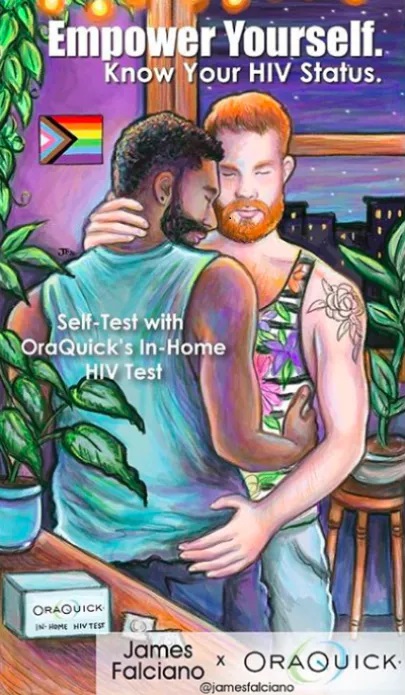
So it’s no surprise that James, like thousands of others, has turned to OraQuick’s in-home HIV test as a key part of their sexual health toolkit. James Falciano is a champion of their queer community, something that is reflected in their art, activism, and everyday life.

It’s the simplest way to get accurate, fast results without waiting in line at the clinic or doctor’s office – if you can even get one these days. In as little as 20 minutes, in the privacy of your own home, you obtain your results, along with access to 24/7 support.

It’s the way to take control of your own sexual health and to own your own sex life.

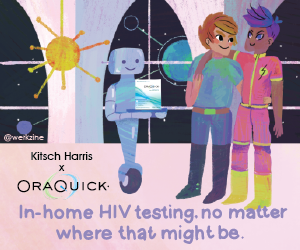
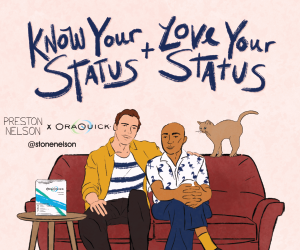
James and two other fabulous queer artists, Preston Nelson and Kitsch Harris, are partnering with OraQuick to encourage HIV self-testing.

Here are samples of their art to explore along with conversations about their work (and read more at Queerty.com).

  • James Falciano

Switching HIV treatment to delstrigo is safe and effective

From Poz. com

People with HIV who switch from a stable antiretroviral (ARV) regimen to Delstrigo (doravirine/tenofovir disoproxil fumarate/lamivudine) had a high rate of full suppression of the virus at the three-year mark in a large Phase III clinical trial.

Princy Kumar, MD, of Georgetown University, presented findings from the open-label, randomized, active-controlled, noninferiority DRIVE-SHIFT trial at the virtual HIV Drug Therapy Glasgow meeting.

Delstrigo contains the relatively new non-nucleoside reverse transcriptase inhibitor (NNRTI) Pifeltro (doravirine), which, like Delstrigo, was approved in September 2019.

Read the full article.

The single biggest risk factor for gay, bi men becoming HIV-positive

From the Advocate.com
Of all those who became HIV-positive, over a third (36 percent) were persistent meth users. Men aged 36-45 reported the most meth use, and those living in Western states had the highest incidence of the drug.

Persistent meth use is the biggest factor for seroconversion, researchers stated, followed by Black ethnicity and a syphilis diagnosis.

Researchers detailed the correlation between meth and HIV.

“Methamphetamine exacerbates HIV risk via increasing sexual libido while simultaneously reducing inhibitions,” the authors stated, according to AIDSMap. “Our findings highlight the need to address methamphetamine use and its associated risks among sexual and gender minorities, the likes of which may also serve to help end the HIV epidemic.”

Read the full article.

Has the COVID-19 pandemic marked the end of casual sex?

From Boston Magazine online

by 

Not long after the virus first hit, I was in a committed relationship, so casual sex wasn’t really an issue. When the relationship ended, though, I realized the impact of the disease on my sex life. Sleeping with random guys was off the table. Even making out with someone at a bar seemed risky. I felt ripped off. I’d been faithful, but he’d cheated, and after kicking him out of our apartment and getting tested (and, I believe, paying extra to expedite the lab results), I wanted to cut loose. I’ve always thought that beyond it being consensual and not involving minors or dire physical harm, there are no moral imperatives connected to sex, and because being a “gay man” means being at least partially defined by your sexuality, I believe it’s a gay man’s birthright and prerogative to exercise that sexuality freely.

This was the late ’80s. Not 10 years earlier, bathhouses and tricking were accepted and celebrated parts of gay life. In 1978, at the hormonally supercharged age of 13, I visited my uncle in San Francisco and had to hide my titillation walking down Polk Street, with all the leather-clad men who looked like Tom of Finland had drawn them. I secretly purchased a steamy memoir about hedonistic gay sex in Paris nightclubs, and snuck over to a convenience store on the other side of town to buy copies of Blueboy and Mandate magazines. Then, not long after, HIV slammed the door shut on all of that, delivering a sharp slap in the face to a horny twentysomething. Now, a possible death sentence came along with getting physically intimate with a stranger. It was unspeakably unfair, and frightening.

Fast-forward to today, and here we are again, it seems. Although I’m now happily married, I was pleased to know that casual sex was beginning to steam up in recent years, thanks to pre-exposure prophylaxis and hookup apps such as Grindr, allowing sex parties and cruising the dunes of P-town to once again become possibilities. But then the novel coronavirus came roaring in. As self-isolation became the new normal, I was reminded of my experiences as a young man during the dark days of the HIV/AIDS crisis, and I sympathized with my uncoupled friends who were suddenly saddled with unsought chastity belts, their libidos on lockdown. Not to make light of it, but among its many horrors, COVID-19 has turned out to be a total cock block. Once again, the idea of physical contact is married to mortal danger, making me wonder whether and how COVID-19 has affected singles’ sexual behavior. Are we headed right toward another pandemic-induced Victorian era?

Read the full article.

14 Things I Wish Queer Men Were Taught in Sex Ed By Zachary Zane

From Pride.com (By Zachary Zane)…

Oh, sex ed. A decade later, and the only thing I remember “learning” from it is “wear a condom.” I honestly don’t think I could tell you another single bit of information they “taught” me except for that men have a vas deferens, which is somewhere in the penis. (Testicles, maybe?)

Imagine how nice it would have been if they actually taught us something useful! Imagine if instead of scaring us and making us fear our own sexuality, sex ed courses taught us how to embrace and explore our sexuality safely! Can you imagine??

So here are 14 things I wish sex ed courses taught me! (And all queer men and queer folks, for that matter. Screw it—everyone can benefit from this!)

Health screening for gay men on PrEP falling behind recommended standards

From aidsmap.com

Levels of sexual health screening among gay men taking PrEP fall well below recommended levels, investigators from the United States report in the online edition of Clinical Infectious Diseases.  Rates of testing for sexually transmitted infections (STIs) in the rectum and throat – which can be asymptomatic – were especially low, so too testing coverage in south-eastern US states which have an especially high burden of HIV and STI infections among gay and other men who have sex with men.

“Consistency of STI screening at PrEP care visits was lower than recommended, especially for rectal and pharyngeal infections that are mostly asymptomatic,” write the authors. “Our findings also highlight the regional variation in gaps between recommendations and PrEP clinical practice overall, and raise concerns about whether comprehensive PrEP care as currently practiced would be effective for STI control.”

Tenofovir-based PrEP is highly effective at preventing infection with HIV but the treatment provides no protection against STIs. Pre-existing research shows elevated STI rates among PrEP-using gay men, probably the result of increased surveillance and sexual risk behaviour. The Centers for Disease Control and Prevention (CDC) therefore recommends that gay men taking PrEP should have comprehensive check-ups for bacterial STIs every three to six months. These sexual health screens should include tests for chlamydia, gonorrhoea and syphilis, with swabs or samples taken from the urethra, throat and rectum.

Read the full article.

New study supports more frequent HIV screening among high-risk young men who have sex with men

From medicalexpress.com

A new study has found that HIV screening every three months compared to annually will improve clinical outcomes and be cost-effective among high-risk young men who have sex with men (YMSM) in the United States. The report, led by researchers at the Massachusetts General Hospital (MGH), is being published online in Clinical Infectious Diseases.

“Young men who have sex with men account for one in five new HIV infections in the United States. Yet, more than half of young men who have sex with men and who are living with HIV don’t even know that they have it,” says Anne Neilan, MD, MPH, investigator in the MGH Division of Infectious Diseases and the Medical Practice Evaluation Center, who led the study.

“With so many youth with HIV being unaware of their status, this is an area where there are opportunities not only to improve care for individual youth but also to curb the HIV epidemic in the U.S. Despite these numbers, the Centers for Disease Control and Prevention previously determined that there was insufficient youth-specific evidence to warrant changing their 2006 recommendation of an annual HIV screening among men who have sex with men.”

Read the full article.

Sex and COVID-19

It may seem obvious that if a person is infected with COVID-19, they risk infecting others during sex. But people still have a lot of questions. Here’s an excerpt on the topic form the Mayo Clinic Website:

The virus spreads by respiratory droplets released when someone with the virus coughs, sneezes or talks. These droplets can be inhaled or land in the mouth or nose of a person nearby. Coming into contact with a person’s spit through kissing or other sexual activities could expose you to the virus. People who have COVID-19 could also spread respiratory droplets onto their skin and personal belongings. A sexual partner could get the virus by touching these surfaces and then touching his or her mouth, nose or eyes. In addition, the COVID-19 virus can spread through contact with feces. It’s possible that you could get the COVID-19 virus from sexual activities that expose you to fecal matter.

There is currently no evidence that the COVID-19 virus is transmitted through semen or vaginal fluids, but the virus has been detected in the semen of people who have or are recovering from the virus. Further research is needed to determine if the COVID-19 virus could be transmitted sexually.

Since some people who have COVID-19 show no symptoms, it’s important to keep distance between yourself and others if the COVID-19 virus is spreading in your community. This includes avoiding sexual contact with anybody who doesn’t live with you. If you or your partner isn’t feeling well or think you might have COVID-19, don’t kiss or have sex with each other until you’re both feeling better. Also, if you or your partner is at higher risk of serious illness with COVID-19 due to an existing chronic condition, you might want to avoid sex.

In case that wasn’t clear, The National Coalition of STD Directors (NCSD), in partnership with National Alliance of State and Territorial AIDS Directors (NASTAD), released a frequently asked questions resource regarding sex and COVID-19. In short, if you’re in the same room with someone who has the virus, you can get infected–sex or no sex.

If you have questions about getting tested, talk to your doctor or health care provider. You can also find testing in your area via a Google search. In Pennsylvania, call the Health Department at 1-877-PA-HEALTH (1-877-724-3258).

LGBT-friendly primary care improves STD screening rates

From medicalxpress.com

Bruce W. Furness, M.D., M.P.H., from the U.S. Centers for Disease Control and Prevention in Atlanta, and colleagues developed and evaluated a quality improvement initiative (Transforming Primary Care for LGBT People) to enhance the capacity of 10 federally qualified health centers (FQHCs; 123 clinical sites in nine states) to provide culturally affirming care.

The researchers found that FQHCs reported increases in culturally affirming practices, including collecting patient pronoun information (42.9 percent increase) and identifying LGBT patient liaisons (300.0 percent increase). Based on  and  (SOGI) from  among nine FQHCs, SOGI documentation increased from 13.5 to 50.8 percent of patients. Screening of LGBT patients increased from 22.3 to 34.6 percent for syphilis, from 25.3 to 44.1 percent for chlamydia and gonorrhea, and from 14.8 to 30.5 percent for HIV among the eight FQHCs reporting the number of LGBT patients.

“FQHCs participating in this initiative reported improved capacity to provide culturally affirming care and targeted screening for LGBT patients,” the authors write.

Read the full article.

Age of sexual debut among young gay-identified sexual minority men

From MedicalExpress.com...

Young gay sexual minority men—especially Black and Latino youth—have their first sexual experiences at younger ages, emphasizing a need for comprehensive and inclusive sex education, according to Rutgers researchers.

The study, published in the Journal of Sex Research, examined consensual sex behaviors to better understand same-sex sexual debut, or the age at which people first engage in sexual behaviors.

The researchers, part of the Rutgers School of Public Health’s Center for Health, Identity, Behavior and Prevention Studies (CHIBPS), found that 19 percent of participants had their first sexual experience before the age of 13.

The researchers also found that same-sex sexual encounters first happen, on average, at 14.5 years, with Hispanic/Latinx and Black non-Hispanic participants reporting a younger age for their first time performing  or engaging in , compared to their peers.

Earlier age of sexual debut among sexual minority men is associated with a range of sexual and health risk behaviors, including increased likelihood of condomless sex; tobacco, alcohol, and other substance use; psychological distress; suicidality; and earlier age of HIV diagnosis.

[…] “As many schools are forced to redesign their classrooms and curricula to accommodate socially distanced or remote learning for COVID-19, this may be the perfect time to consider implementing comprehensive sex education programming to provide age-appropriate sexual health education for people of all genders and sexual orientations,” said Caleb LoSchiavo, doctoral student at the Rutgers School of Public Health and co-author.

Read the full article.

Alternative PrEP injection, dosed every other month, beats daily PrEP pill

From thebodypro.com

Taken every 2 months, the long-acting injectable drug cabotegravir (CAB-LA) prevented more HIV infections than daily oral pre-exposure prophylaxis (PrEP) with tenofovir/emtricitabine (TDF/FTC), according to newly announced results from a major Phase 3 study. The results were released originally in May due to the overwhelmingly positive data on CAB-LA for PrEP, but researchers presented their final data in early July at the 23rd International AIDS Conference (AIDS 2020).

The data show that the experimental drug is superior to the current standard-of-care PrEP regien, which may open the door for a new biomedical HIV prevention option aimed at those who would prefer a shot six times a year over taking a daily pill.

“The HPTN 083 results demonstrating the superiority of CAB to TDF/FTC have the potential to transform the landscape of HIV prevention for cisgender MSM and transgender women,” said HPTN 083 protocol chair Raphael J. Landovitz, M.D. “We know that some people have difficulty with or prefer not to take pills, and an injectable product such as long-acting CAB [cabotegravir] could be a very important option for them. We want to thank the study participants and research staff, as this study would not have been possible without their dedication and commitment.”

Read the full article.

The dudes who won’t wear masks

From the Atlantic

Americans are figuring out how to live with a deadly new virus now, just as gay men did in the early years of AIDS. Abstinence from sex wasn’t sustainable, and condoms became a ticket to greater sexual freedom. Likewise, Americans can’t abstain from human interaction forever, and widespread masking may be a ticket to more social and economic freedom. But trying to shame people into wearing condoms didn’t work—and it won’t work for masks either.

The public-health messaging around masks during the coronavirus pandemic has been muddled and confusing. The federal government recommended against face coverings for the public in March, with some public-health officials positing that they may even cause more harm than good. But a growing body of science, including evidence that people can transmit the virus when they don’t have symptoms, indicates that masks are an important tool for mitigating coronavirus transmission, especially in combination with physical distancing, hand hygiene, and other preventive strategies. Indeed, public-health concerns may justify mask mandates in some settings, including indoor spaces where many people gather for extended periods of time. But mandates have major downsides: Any enforcement is likely to disproportionately affect communities that are already marginalized, and some Americans—including some elected leaders in states facing serious coronavirus outbreaks—believe that requiring people to wear masks is an infringement on civil liberties. In practice, if Americans are going to mask up, public-health officials will have to cajole, not compel.

Read the full article.

Health Alert: HHS rule encourages discrimination and endangers LGBTQ health

A message from the Gay and Lesbian Medical Association

Earlier today the Department of Health and Human Services released a final rule that eliminates federal regulations ensuring nondiscrimination in healthcare for transgender people and LGB people, people who are pregnant or seeking an abortion, those who require healthcare services in a language other than English, and other marginalized communities. In its announcement, HHS noted it was “restoring the rule of law” by interpreting sex discrimination “according to the plain meaning of the word ‘sex’ as male or female and as determined by biology.”

GLMA President Scott Nass, MD, MPA, issued the following statement in response:

“It is unconscionable that the Administration would take this action to encourage and promote discrimination during a pandemic that is already severely impacting vulnerable communities, including LGBTQ people. The fear of discrimination can have very real health consequences, especially in a public health crisis. These discriminatory measures are not only cruel, they also undermine public health and will assuredly result in poorer health outcomes for LGBTQ people.

“The rule stands in contradiction to prevailing medical science regarding transgender health and the consensus of all the leading health professional associations who have consistently opposed this measure. Healthcare providers in fact are united by the evidence in their support for nondiscrimination protections in healthcare for transgender and LGBQ people.

STD rates likely skyrocketing in US as fewer people get tested during pandemic

From businessinsider.com

As clinics and health departments across the country have shuttered during the coronavirus pandemic, the nation’s roughly 2,200 disease detectives, the so-called “contact tracers” of infectious disease outbreaks, have been re-deployed to track where cases of COVID-19 — the disease caused by the novel coronavirus — are spreading, to try to stop those outbreaks in their tracks. It’s a necessary shift, but one that may have serious, long-term impacts for the country’s sexual health, and for President Trump’s year-and-a-half-old plan to “eliminate” HIV from the US by 2030.

[…] According to a recent NCSD survey of HIV and STD disease tracers around the country, 83% are forgoing their usual field visits as a result of this pandemic. Two-thirds of the country’s clinics (66%) have also reported decreases in health screenings and testing due to COVID-19.

Read the article.

STD testing rates, service receipt among HIV-positive MSM remain low

From the American Journal of Managed Care

decorative imageThe CDC recommends regular testing for bacterial sexually transmitted diseases (STDs) among all sexually active gay, bisexual, and other men who have sex with men (MSM) because they have a higher risk of infection. Chief among these STDs are gonorrhea, chlamydia, syphilis, and hepatitis C virus (HCV). Those most at risk also should be receiving recommended STD counseling services.

“Having an STD (like gonorrhea) makes it easier to get HIV or give it to others, so it’s important that you get tested to protect your health and the health of your partner,” states the CDC.

Despite these guidelines, there has been a constant uptick in STDs over the past decade, particularly among HIV-positive MSM, even though they are receiving care for their HIV, according to the authors who investigated the receipt of STD testing and associated services among these individuals and published their results online today in Annals of Internal Medicine.

The primary outcome of their study was to determine both deficiencies in bacterial STD testing and what risky behaviors result in these deficiencies among HIV-positive MSM—especially because having an STD increases the risk of transmitting HIV.

Read the full article.

Pandemic sparks concerns about surging STD, HIV rates

The pandemic that has upended life in the U.S. could lead to increased STD rates and setbacks in the fight against HIV as public health resources are shifted to the coronavirus response.

Access to STD and HIV testing and treatment services are dwindling as local health departments shuffle staff to respond to COVID-19 and clinics reduce hours or close altogether and cancel outreach programs.

“We are seeing a complete disruption to STD prevention here in the United States,” said David Harvey, executive director of the National Coalition of STD Directors (NCSD). “We expect to experience even higher STD rates as a result.”

Read the full article.

Second Open Letter on COVID-19 Focuses on Nondiscrimination, Data Collection and Economic Harm for LGBTQ Communities

From the Gay and Lesbian Medical Association

On April 21, 2020, GLMA, Whitman-Walker Health, the National LGBT Cancer Network, the National Queer Asian Pacific Islander Alliance, the New York Transgender Advocacy Group, and SAGE issued a second open letter to public health officials, healthcare institutions and government leaders on the impact of COVID-19 on LGBTQ communities. The letter, joined by 170 organizations, called for action to protect LGBTQ patients from discrimination and to include sexual orientation and gender identity in data collection efforts related to the pandemic. The letter also called for action to address the economic harm to LGBTQ communities from the pandemic.

To read the full second open letter and list of signatories, click here.

The letter released on April 21 is a follow-up to an open letter signed by more than 150 organizations issued by the six coordinating organizations on March 11, 2020. Information on the first letter is available here.

Important COVID-19 Resources:

What you need to know about managing HIV during the COVID-19 outbreak

From Parade.com

Decorative imageDuring the coronavirus pandemic, people with HIV fall into the “underlying conditions” group that may need to be more careful about their health. As states give shelter-in-place orders and move through the toughest weeks ahead in the outbreak, those with HIV should take a few extra precautions to plan ahead and remain safe.

Overall, people with HIV should know that they aren’t more likely to contract COVID-19 than others, the World Health Organization says. At this time, it is unknown whether those with HIV face a greater risk of infection or more serious complications.

“While there’s not yet a lot of evidence here, COVID-19 does not appear to affect people with HIV differently than other people,” says Stephen Lee, executive director of NASTAD, formerly known as the National Alliance of State and Territorial AIDS Directors.

Until more data from the cases in China and the U.S. can be analyzed, those living with HIV should be “extra vigilant,” he says, especially those who have advanced HIV, are older, or have poorly controlled HIV. Those with additional chronic diseases, such as diabetes or heart or lung disease, should be careful as well.

“Stay home as much as you can, keep a safe distance, and wash your hands often,” Lee says.

[…]

Researchers haven’t been able to study much about the correlations between HIV and COVID-19. At the same time, those living with HIV should follow CDC guidelines for those with underlying health conditions, says Jonathan Mermin, director of the National Center for HIV/AIDS, Viral Hepatitis, STD and TB Prevention.

Read the full article on Parade.com.

How does COVID-19 impact LGBTQ2 communities?

From Xtra.com

As the COVID-19 pandemic threatens the health of people and of economies worldwide, many in the global LGBTQ2 decorative imagecommunity sense a particular vulnerability to the pandemic’s immediate and downstream effects. In response, many are coordinating efforts to care for their own communities, often modeling their strategies on lessons learned from HIV/AIDS advocacy.

“One of the things I’m very concerned about is the social safety net,” says Charles Stephens, the director of The Counter Narrative Project, a Black gay men’s advocacy organization based in Atlanta, Georgia. Indeed, systematic employment discrimination could make the potential economic and health-related fallout of COVID-19 a greater threat to queer communities.


Read the full article.