Gay-rights organization endorses the use of a once-a-day pill to prevent HIV infection

From ABC News online

Some doctors have been reluctant to prescribe the drug, Truvada, on the premise that it might encourage high-risk, unprotected sexual behavior. However, its preventive use has been endorsed by the Centers for Disease Control and Prevention, the World Health Organization, and many HIV/AIDS advocacy groups

The Human Rights Campaign, which recently has been focusing its gay-rights advocacy on same-sex marriage and anti-discrimination issues, joined those ranks with the release of a policy paper strongly supporting the preventive use of Truvada. It depicted the drug as “a critically important tool” in combatting HIV, the virus that causes AIDS. “HRC does not take this position lightly,” the policy paper said. “We recognize there is still ongoing debate … and that there are those out there who will disagree with our stance.”

Truvada has been around for a decade, serving as one of the key drugs used in combination with others as the basic treatment for people with HIV. In 2012, the Food and Drug Administration approved it for pre-exposure prophylaxis, or PrEP — in other words, for use to prevent people from getting sexually transmitted HIV in the first place. “Today, there is an unprecedented chance to end the HIV/AIDS epidemic, in part through PrEP’s aggressive prevention of new HIV infections,” said Chad Griffin, president of the Human Rights Campaign. “There is no reason — medical or otherwise — to discourage individuals from taking control of their sexual health and talking to their doctor about PrEP.”

The CDC says studies have shown that Truvada, when taken diligently, can reduce the risk of getting HIV by 90 percent or more. Research discussed at the International AIDS Conference in July found that use of the drug does not encourage risky sex and is effective even if people skip some doses.

As part of its announcement, the Human Rights Campaign called on insurers, regulators and Truvada’s manufacturer to take steps to reduce costs, raise public awareness, and make the option available to all medically qualified individuals who could benefit from it, regardless of ability to pay.

The cost of Truvada varies widely; a New York State Health Department fact sheet gives a range of $8,000 to $14,000 per year. The manufacturer, California-based Gilead Sciences Inc., has a program that provides assistance to some people who are eligible to use Truvada but cannot afford it.

The Human Rights Campaign urged all states to emulate Washington state, which implemented a program earlier this year offering assistance in paying for PrEP. The preventive option also was endorsed by New York Gov. Andrew Cuomo when he announced initiatives in June aimed at ending the state’s AIDS epidemic by 2020.

The HRC called on state insurance regulators to take action against any insurers who deny legitimate claims from patients who’ve been prescribed PrEP by their doctors.

A prominent provider of services to HIV-positive people, the Los Angeles-based AIDS Healthcare Foundation, remains a vocal critic of the preventive use of Truvada. In an ad campaign launched in August, the foundation says many gay men fail to adhere to Truvada’s once-a-day regimen and describes government promotion of the drug as “a public health disaster in the making.”

Come out against stigma, live out proud

by  – Executive Director of the National Minority AIDS Council


The fight against HIV/AIDS has always been about more than the search for medicine or a cure. It has been a battle for human dignity, to demonstrate that each life, regardless of race, sexual orientation, gender identity, nation of origin, or religion, has inherent value. From the beginning, this epidemic has taken the largest toll on our most marginalized communities. From gay men and transgender women to injection-drug users and people of color, those who are most often shut out of our nation’s halls of affluence and power are also the most vulnerable to a whole host of health challenges, including HIV.

A few days ago I had the honor of participating in a panel on HIV sponsored by U.S. Rep. Barbara Lee (D-California) at the Congressional Black Caucus Foundation’s Annual Legislative Caucus. During the event the always-inspiring Douglas Brooks, who is the first black gay man living with HIV to head the White House Office of National AIDS Policy, gave brief opening remarks in which he quoted the Bible, saying, “He came unto his own, and his own received him not” (John 1:11). As we once again marked National Gay Men’s HIV/AIDS Awareness Day (Sept. 27), this simple verse resonated with me in a powerful way and seemed to reflect the position that so many gay men, especially gay men living with HIV, find themselves in.

Continue reading on the Huffington Post.

HIV Treatment Works national communication campaign for people living with HIV

he Centers for Disease Control and Prevention’s (CDC) HIV Treatment Works national communication campaign for people living with HIV features the stories of individuals living with HIV talking about how sticking to treatment helps them stay healthy, protect others, do what they love, and live a longer, healthier life. Visit the campaign website for resources and free materials: http://www.cdc.gov/HIVTreatmentWorks. More than 1.1 million people in the United States are living with HIV.

‘A Day With HIV 2014’ addresses HIV stigma

logoFrom the Huffington Post

HIV stigma needs to be a thing of the past, and there’s an awesome way you can help change public perception.

For the fifth year in a row, Positively Aware and TPAN are sponsoring “A Day with HIV,” an HIV photo campaign. The initiative invites people from all around the world to take and submit a photo from their life at some point during the day on Sept. 9 in order to raise awareness about what it means to live in a world with HIV.

“A Day With HIV” provides a unique opportunity for individuals to make an impact through visual storytelling and contributing to breaking down stigma surrounding HIV.

This year, in an effort to extend its “A Day With HIV” virtual photo sharing initiative, Positively Aware and TPAN are working in partnership with Let’s Stop HIV Together, an HIV awareness and anti-stigma effort of the Centers for Disease Control and Prevention.

“With parallel goals aimed at raising general HIV awareness and addressing the often-associated stigma, it was really a natural fit for these two campaigns to join forces,” Jeff Berry, Editor of Positively Aware, said in a statement. “By coming together, we are building an even larger community of support and ensuring that we reach each and every corner of society, particularly those people who may not have otherwise experienced the power of the virtual campaign.”

For more information on where to submit your pictures head here. Participants are encouraged to take their photo on Sept. 9 and submit it to Positively Aware by Sept. 12.

Check out a slideshow of images from last year’s “A Day With HIV” on the Huffington Post.

Combating HIV by zip code

Minority neighborhoods in the U.S. are hit as hard by HIV as gay enclaves

From Healthline.com

HIV rates in some urban American neighborhoods rival those of Haiti and Ethiopia, according to a researcher at Brown University in Providence, R.I.

And while affected communities include big-city gay enclaves, such as New York’s Chelsea district, minority neighborhoods in the Bronx and Harlem make the list, too. The difference is that those in mostly white neighborhoods are more likely to be tested and treated than those in minority neighborhoods.They are also less likely to die of AIDS.

In an era of Internet targeting, Dr. Amy Nunn’s approach of going door-to-door if necessary to reach people with HIV may seem old-fashioned. But in areas with limited access to health care, employment, and education, HIV experts agree that a new model is needed to reach at-risk groups of black and Hispanic Americans.

Of the 50,000 new HIV infections in the U.S. in 2010, gay and bisexual men accounted for two-thirds of them, according to the U.S. Centers for Disease Control and Prevention (CDC). Black men and women are eight times more likely to become infected than whites, based on population size. Of all groups, white men who had sex with men comprised the largest segment of new infections, at 11,200. Black men who had sex with men were second, with 10,600 new infections.

Dr. Nunn, an assistant professor of medicine at Brown, told Healthline that more money must be targeted toward poor and minority neighborhoods. “If this were happening to white people there would be protests,” she said. “It’s so easy to overlook poor people.”

Of the more than 1.1 million people in the U.S. living with HIV, almost 16 percent don’t know they have it, according to the CDC. Powerful antiretroviral medications available to most everyone in the U.S. can suppress viral loads to the point that transmission is unlikely. But they will only work if they are taken regularly.

“We’ve got to get these people into treatment come hell or high water,” Nunn said.

Continue reading on Healthline.com.

Black voices: leveraging digital tools to reach and engage Black gay men

From AIDS.gov

More Americans than ever before have access to Internet-enabled technologies and are participating in online social networking platforms. This trend is particularly notable among women, African-Americans, and Latinos and provides hope that effective use of new social technologies could reshape how we reach, engage, and mobilize vulnerable populations such as Black gay men (BGM) and other men who have sex with men (MSM) who are disproportionately impacted by the domestic HIV epidemic. For example, recent data from the The Pew Research Center’s Internet & American Life Project indicate that while the digital divide persists as it relates to Internet access, African-Americans use mobile devices at the same rate as their peers and lead the way in participation in social media such as Twitter.

There is little data available about how BGM/MSM are using social technologies. So, last year, as part of ongoing efforts to improve the health and wellbeing of BGM/MSM, The National Black Gay Men’s Advocacy Coalition (NBGMAC) launched a national survey to learn about the online communication habits of Black gay men. The survey’s goals are to better understand how BGM/MSM use the Internet to communicate and receive national health policy and advocacy information. The data gathered from this survey will contribute to our understanding of how to effectively leverage the Internet for outreach and engagement around health information and national policy issues of importance to BGM/MSM across the nation.

Preliminary survey data highlight the importance of social networking platforms like Facebook in connecting with communities of Black gay men and sharing health policy and advocacy information. The data also reflect a notable level of interest in biomedical HIV prevention tools like Pre-Exposure Prophylaxis (PrEP). Findings like these point to the growing importance of making information available about HIV prevention in a way that meets the needs of the populations most impacted the epidemic. If you are a Black gay, bisexual or same-gender loving man, please take a moment to complete the brief survey and share with your networks. If not, please also consider sharing with any colleagues, friends or loved ones who may be willing to participate and help us to shed light on the communication, health information, and policy and advocacy needs of this underserved community.

To complete the survey, click here or copy and paste the survey’s URL into your Internet browser: http://svy.mk/15KFMwc .

A guide for LGBT people choosing health care plans

The Affordable Care Act (ACA) enrollment deadline is coming up on March 31st. There are a number of LGBT-specific resources available for you and your patients or clients to learn more about the ACA and how to get healthcare insurance coverage. Where to StartWhat to Ask: A Guide for LGBT People Choosing Health Care Plans, developed by Strong Families, is a guide that can help you help your patients, clients, friends and family:
  • Evaluate their healthcare needs,
  • Navigate new insurance options and
  • Choose the best plan for them.
Access to affordable health insurance can help address the health disparities that exist in the LGBT community, can provide critical preventative care widely and can ensure all individuals and families can get the care they need without going bankrupt. Click here to download the guide now. Click here for more information from our friends at Out2Enroll.
.

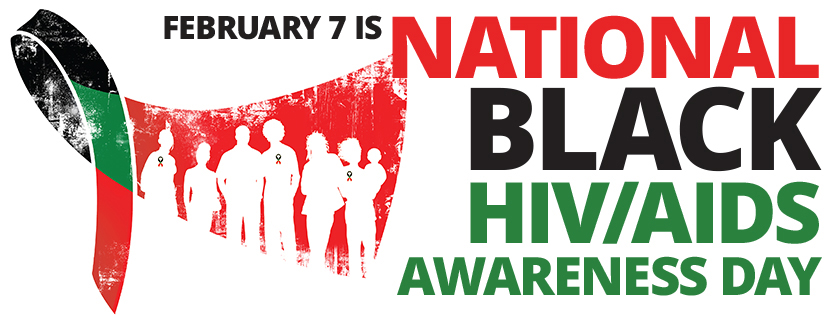
February 7 is National Black HIV AIDS Awareness Day

Nat Black HIV wareness dayFriday, February 7 is National Black HIV AIDS Awareness Day (NBHAAD). There are many ways you can help increase HIV awareness and work to reduce the impact of HIV in the black community in support of NBHAAD. Check out this list of Ten Things You Can Do for NBHAAD. Also, please join the Twitter Town Hall sponsored by the Centers for Disease Control and Prevention (CDC) and AIDSVu, with the NBHAAD Strategic Leadership Committee (Twitter: @NatBlackAIDSDay) and the National Association for the Advancement of Colored People (NAACP) (Twitter: @NAACP). The theme is “How do we end the HIV epidemic in Black America?”and will take place on Friday, February 7 at 12 pm Eastern Time.

The hashtag #NBHAADchat will be used for the Twitter Town Hall. Everyone is encouraged to participate. For more information on NBHAAD or to find and NBHAAD event, go to http://nationalblackaidsday.org/.

Legacy aims to end high rates of smoking by the LGBT community

From the Edge on the Net

Pennsylvania-Woman-Tells-Teens-to-Get-a-Job-Is-Shot-over-a-Cigarette-2Did you know that gays smoke cigarettes at rates nearly 70 percent higher than the general population, and tobacco companies target the LGBT community specifically? There are 440,000 preventable deaths from tobacco-related causes each year. Maybe it’s time to make that resolution happen, and let Legacy help you kick that butt for good.

“Legacy has been working to support the LGBT community since its inception, doing everything from funding grant projects to listening sessions, convening folks to talk about issues facing the community,” said Legacy’s Senior Vice President of Collaboration and Outreach William Furmanski. “Last year we had a report published with our findings and hosted a webinar to have a national dialogue.” Legacy is a Washington, D.C.-based foundation responsible for truth®, the national youth smoking prevention campaign that has been cited as contributing to significant declines in youth smoking. Their education campaigns include EX®, an innovative public health program designed to speak to smokers in their own language and change the way they approach quitting. Legacy helps people live longer, healthier lives by building a world where young people reject tobacco, and anyone can quit.

Furmanski cited statistics that reveal the LGBT community has some of the highest rates of smoking among any population group — in fact, dramatically higher than the public at large. This means that the disease and death caused by tobacco use impacts our community at a much higher rate. “Anything we can do to help individuals understand the risks in smoking and how they can improve their health by quitting, and strategies used by the tobacco industry to attract them to a product are important,” said Furmanski. “We realized that even just relaying these harms would help the LGBT community, because tobacco use takes a back seat to other health issues in our community like HIV/AIDS. Many people think smoking can be okay to deal with the stress in life.”

Read the full article on edgeonthenet.com 

HIV testing and linkage to care available for young gay, bi and transgender African Americans via Project Silk

projectsilkProject Silk is a service project for young adult gay, bisexual or transgender African Americans. It’s a partnership between the Pennsylvania Department of Health and the University of Pittsburgh and is run by Anthony Silvestre, PhD, and Mackey R. Friedman, PhD, MPH, of the department of infectious diseases and micobiology in Pitt’s Graduate School of Public Health. Project Silk provides a safe, youth-centered space in downtown Pittsburgh and is open four nights a week. An on-site social worker is available and helps connect young people to important services such as housing, employment and health care. HIV testing and linkage to care are available during drop-in hours, and a private office can be requested. The project includes a mix of structured programming, such as civic discussion groups. There’s also unstructured time for young people to practice dance moves and prepare for house balls, which are competitive dance events.

Read more on newpittsburghcourieronline.com


ACT UP commits to reinvigorate the national prevention agenda

From TheBody.com (written by ACT UP members  James Krellenstein and Jim Eigo)…

ACT UP commits to reinvigorate the national prevention agendaBefore Hillary Clinton stepped down as secretary of state, she presided over the official November 29, 2012, release of a Blueprint for an AIDS-Free Generation. With a trumpeter on the inside front cover, the 64-page document declared that the world was about to enter the third and final phase of the war against HIV infection. After AIDS as a full-scale plague, and AIDS as a manageable disease, we now had within our sites the elimination of symptomatic HIV. Twenty days later, however, another arm of the U.S. government released another document. Some news it contained struck a discordant note with Secretary Clinton’s battle cry. After reading it, many wondered if we hadn’t somehow traveled back to the dark early years of the epidemic.

According to U.S. Centers for Disease Control and Prevention (CDC) incidence estimates released on December 19, men who have sex with men (MSM; a category that includes transgender women), comprising less than two percent of the population, accounted for 66 percent of the 47,600 new HIV infections in 2010. Between 2008 and 2010, new infections rose 12 percent for all MSM and 22 percent for young MSM. Some subpopulations were at substantially higher risk: an African American man who had sex with men was six times likelier to acquire HIV infection than his white counterpart.

Spurred by news of the sharp upward trend of new infections, a core of grassroots activists of differing ages, sexes, orientations, colors, and serostatus began working on prevention issues for ACT UP/NY — they include the authors. Though the CDC numbers told of a prevention emergency, few in New York’s gay communities — from the rank-and-file to the top echelons of Gay, Inc. — seemed to realize what was going on. HIV was something that the community had taken care of back around 1997, wasn’t it? Effective antiretroviral therapy (ART) has made HIV manageable for most who have access to the drugs. For many younger men, AIDS was a disease — and a political cause — of the 1980s. Yet the successful treatment of HIV requires that strong drugs be taken over a lifetime. And those most likely to become infected — young, queer, and of color — are among the least likely to receive care, or even to know they’re infected.

Keep reading on TheBody.com.

“Speak Out: Let’s Bring HIV Out of the Closet”

From the Website Edge in Boston…

The signs are hard to miss. Exit a Muni train at the Castro station, and the wall-sized posters are greeting you as the doors slide open. The message – it is time to start talking about HIV and AIDS. Or, as Vincent Fuqua, program coordinator for the San Francisco Department of Public Health put it, “find our voice again.”

“As long as people are still becoming infected with HIV, as long as people are still HIV-positive,” Fuqua said, “it’s still a part of us.”

The Department of Public Health, along with the national Greater Than AIDS initiative and the Kaiser Family Foundation, recently introduced Speak Out: Let’s Bring HIV Out of the Closet, a social marketing campaign aimed at encouraging men not only to get tested for HIV regularly, but also to speak openly about their status and the disease in general, as a way to remove some of the stigma within the community associated with being HIV-positive.

“We understand that there’s been a lot of strides in the gay community, which is incredible. The thing is, though, HIV is still a big part of our community as well. So we wanted to make sure people don’t forget that,” Fuqua said.

The campaign was introduced October 10 at Blush Wine Bar in the Castro. It will extend to other cities next year.

Continue reading here.

Latino group aims to stop stigma associated with HIV and AIDS

From the CBS affiliate in Philadelphia…

PHILADELPHIA (CBS) – With the AIDS Walk Philly just days away, a queer Latino group is carrying out a new campaign to stop the stigma associated with HIV and AIDS in North Philadelphia. Latinos make more than 13-percent of new HIV cases and, according to statistics, they are less likely to get tested. Experts believe the stigma of having HIV could discourage early testing. So “Positivo” is all about transforming negative attitudes about having HIV into positive.

“We kept hearing Latinos are homophobic, there’s more stigma in the Latino community,” says Elicia Gonzales, executive director of GALAEI. “But that’s not true.” Gonzales says the GALAEI conducted a small survey of about 100 people showing that Latinos are accepting of family members and friends who are gay, as well as those with a known HIV status. So she says they launched Positivo to help dispel the myth. The campaign includes positive images of Latinos from the neighborhood saying what’s positive about knowing your HIV state. “We canvassed in as many parts of North Philly as we could,” says Nikki Lopez, youth counselor at GALAEI. “We really wanted to integrate the images into the communities themselves, especially in areas that do not have the resources we have downtown.”

The group also started a social media campaign on Twitter, Instagram and Facebook with the hashtags #PositivoPhilly and #GALAEIPhilly. The group says Positivo is the first campaign of its kind.

Read the full article on CBS Philly. For more info on Positivo or on how to share your story, visit: www.GALAEI.org.

LGBT groups assist with “Obamacare”

From the Washington Blade

At least seven D.C.-based LGBT or LGBT-friendly organizations sprang into action on Tuesday to help members of the LGBT community and people with HIV choose a health insurance plan under the controversial U.S. Affordable Care Act that’s better known as “Obamacare.” Similar to reports surfacing from across the country, officials from the local groups said some of their clients encountered computer glitches on the website for D.C. Health Link, the city’s online health insurance marketplace or “exchange” on its first day of operations on Tuesday.

But all of the officials contacted by the Blade said they were optimistic that the exchange program in D.C. and those in neighboring Maryland and Virginia would soon be operating smoothly and would be an important resource for LGBT people looking for health insurance. “I’m excited about it,” said Ron Simmons, executive director of the D.C.-based Us Helping Us, an HIV services organization that reaches out to black gay men. “We have so many clients who don’t have health insurance,” Simmons said. “If you are HIV positive you need a certain type of insurance, and we are ready to help people choose the best policy suited for their needs.”

Read the full article on the Washington Blade.

Activists campaign for better access to HIV “morning after pill”

From the Guardian.com

Two years ago, James Krellenstein had unprotected sex. Luckily, the 22-year-old knew exactly what to do. The next day, he took a train from his parents’ house on Long Island to see a doctor at Bellevue Hospital inNew York City. The doctor prescribed James PEP – a strong combination of drugs usually prescribed for people who already have HIV. Months later, Krellenstein found out his partner from that night was indeed HIV-positive. But James remained negative. PEP’s little-known effectiveness in preventing the virus taking hold in someone’s body has led it to be dubbed the “morning-after pill for HIV”.

Yet Krellenstein’s experience remains rare. While the idea of treating people who may have been exposed to HIV with PEP has gained ground among doctors and activists over the last few years, most local governments in the United States have yet to implement a comprehensive PEP distribution or education program. That’s left many who are most at risk from contracting HIV unaware the option even exists. Now, as HIV diagnoses continue to rise among gay men, activists and experts are urging governments to invest money in PEP awareness campaigns and treatment programs. Otherwise, they say, many communities might be heading for a new HIV and AIDS crisis in coming years.

“We’re going to have to deal with [HIV] one way or another,” said Krellenstein, a member of the HIV awareness and activism group Act Up. “And I’d rather do it on the prevention side rather than waiting for everyone to be positive.” Krellenstein’s concern about “everyone” contracting HIV may sound like hyperbole. But if current infection rate trends continue, 54% of all men who have sex with men (MSM) will have HIV by the time they are 50, according to a 2009 University of Pittsburgh study. Among African American men who have sex with men, half will have HIV by the time they are 35. And while contracting HIV is no longer a death sentence, many worry that the increasing incidence of infection will burden the already-strained US healthcare system. The lifetime cost of treating someone with HIV can reach over $1m.

Those staggering numbers are what’s led groups like Act Up to campaign for increased funding for PEP, and increased awareness within the gay community. Act Up’s involvement is notable. The group made a name for itself pushing for politicians to take the HIV crisis seriously in the 1980s. But as treatment for HIV improved, gay marriage and other social issues replaced health at the forefront of the LGBT rights movement, and Act Up faded from view. Now, the group has found renewed purpose in calling notice to the increasing prevalence of HIV and the lack of funding for unorthodox solutions like PEP. While no one in Act Up thinks PEP is a cure-all in the ongoing fight to stop the spread of HIV, many believe it’s a missing piece in comprehensive “prevention pipeline” that includes condoms, regular testing, and education.

“A lot of young gay guys, even well-informed ones, don’t know a lot about HIV,” said Jim Eigo, an activist with Act Up who also petitioned governments to take action on HIV in the 1980s. “We’ve got to open up the eyes of the gay community … and say if you’re HIV-negative, there’s an individual value and a community value in staying that way.”

Continue reading the full article here.