New primary care practice in Pennsylvania catering to the LGBT community

new practice in PAFrom lehighvalleylive.com

Bethlehem resident Allen Smith was in his 40s before he felt comfortable telling his doctor he was gay. And when he worked for 10 years at Lehigh Valley Health Network’s AIDS Activities Office in Allentown, most of the patients he saw also lacked primary care physicians they were open with. It’s a trend Smith hopes to help end. After working for more than three years, he’s opened a primary care practice in Bethlehem especially to provide medical care for lesbian, gay, bisexual and transgender people.

Smith’s Novus Adult Care Services is the third primary care practice in Pennsylvania catering to the LGBT community, Equality Pennsylvania President Adrian Shankersaid. A U.S. Centers for Disease Control and Prevention listing shows only 13 such practices nationwide. “With any underserved population, sometimes there are needs that aren’t met by general practice health centers,” said Shanker, a Bethlehem resident. “It’s important for people to see a doctor you feel comfortable being out with.”

In addition to serving as a medical office where patients feel comfortable disclosing their sexuality, LGBT specialty providers also are better versed in health concerns specific to the community, including HIV and AIDS and transgender issues, Smith said.

Read the full article on lehighvalleylive.com

Men can use a female condom for anal sex

From the Pacific Standard online…

fc2-condom-290x290“We see sexy commercials for Trojan. We see sexy commercials for Durex,” says Jennifer Medina Matsuki, condom availability director for the New York City Department of Health and Mental Hygiene, addressing a breakout session on FC2, the new female condom, at the National Harm Reduction Conference in October. “There was no sexy marketing. People would see it at various events and say, ‘What is that?’”

FC2 was approved by the Food and Drug Administration in 2009, and bears considerable advantages over both its predecessor and male condoms—namely, they put more power in the hands of the receptive sex partner and feel better than the first female condom, also lacking its trademark rattling sound—but is still a minor player in the world of safer sex.

Matsuki’s department started stocking the first female condom in 1998, seven years after its introduction, and now buys 1.5 million female condoms per year, compared to 35.5 million male condoms. Worldwide, FC2s account for just 1.6 percent of total condom distribution. So far, there’s just one manufacturer, as opposed to the dozens of male condom manufacturers, though other companies—such as Origami, which is working on insertable condoms for both anal and vaginal sex—have devices in development. Where FC1 was advertised aggressively in women’s magazines—only to be mocked in the same publications as a noisy, awkward novelty—FC2 has been sold via social media and gatekeepers at public health organizations. But it’s yet to shrug off FC1′s bad rap.

Read the full article here.  You can find out how to use a female condom in this YouTube video.

Facing AIDS theme of National HIV Testing Day

From AIDS.gov

Facing AIDS is a digital photo sharing initiative with the goal of reducing HIV-related stigma and promoting HIV testing. Many AIDS.gov blog readers have contributed personal messages to the Facing AIDS photo gallery, most recently in recognition of World AIDS Day (December 1, 2012 – visit the gallery to see the inspiring messages collected over the five years of the initiative). Many of your Facing AIDS messages highlight the importance of confronting stigma and echo the theme of National HIV Testing Day: Take the Test. Take Control. That consistency made it easy for our team to re-purpose the photos into the newest video in our Facing AIDS series. To learn how participate in Facing AIDS, read this blog post. To watch other videos in the Facing AIDS series, please use this playlist Exit Disclaimer. Click here to learn more about locating HIV testing near you. Please watch and share the “Facing AIDS for National HIV Testing Day” video.

Health Alert – meningococcal meningitis

From the Pitt Men’s Study

You may have heard about the recent cases of bacterial meningitis among gay men in in New York and LA County.  Meningitis is an inflammation of the membranes surrounding your brain and spinal cord. The swelling associated with meningitis often triggers the “hallmark” signs and symptoms of this condition, including headache, fever and a stiff neck.

Most cases of meningitis in the U.S. are caused by a viral infection, but bacterial and fungal infections can also cause the disease.  The recent cases of meningitis in New York and LA County were caused by a bacteria called meningococcus.  This bacteria can spread through intimate contact such as sharing eating utensils, kissing, and close physical contact (including all forms of sex, of course).

Viral infections usually get better on their own.  However, bacterial infections require immediate medical treatment with antibiotics and can result in serious illness and death. It is also worth noting that persons with immune system deficiencies are particularly susceptible to the disease.

Initially, meningitis symptoms may resemble the flu, with worsening headache, vomiting, and a sudden high fever (over 101.3). People may also often develop neck stiffness and sensitivity to light.  If left untreated, people often progress to confusion, coma, and ultimately death.

There are vaccinations to prevent the deadly forms of meningitis and the Pitt Men’s Study recommends that if you are traveling to New York City or Los Angeles, and plan to be in close quarters with other gay men, you might want to consider getting vaccinated with the meningococcal vaccination.

For more information about meningitis, visit the Centers for Disease Control and Prevention Website:
http://www.cdc.gov/meningitis/bacterial.html

For more information about the recent outbreak of meningitis among gay men in New York and LA County, go to:http://www.nytimes.com/2013/05/19/health/for-gay-men-a-fear-that-feels-familiar.html

CDC expands Let’s Stop HIV Together campaign™, launches Spanish version

From AIDS.gov

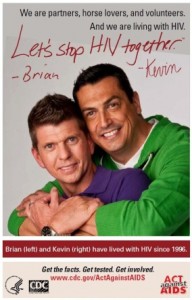
spanish campaignThis month, the Centers for Disease Control and Prevention expanded the national HIV awareness and anti-stigma campaign, Let’s Stop HIV Together, including the launch of a Spanish-language version of the campaign, Detengamos Juntos el VIH. The campaign now includes new participants, more materials in both Spanish and English, and HIV awareness and testing information in Spanish through the new website. Campaign materials are available on the CDC’s Act Against AIDS website. New English materials available on the campaign website include:

  • PSA for TV featuring Jamar Rogers from NBC’s The Voice
  • 4 personal video stories
  • 15 campaign posters
  • Brochure

New Spanish materials on the Spanish-language version of the Act Against AIDS website include:

  • Public Service Announcements (PSAs) for radio and TV
  • 3 personal video stories
  • 12 campaign posters
  • Brochure and palm card

Expanded meningococcal vaccination recommendation to MSM who have traveled to NYC

From GLMA:

On March 25, 2013, the New York State Department of Health (DOH) expanded a recommendation issued earlier in March by the New York City Department of Health and Mental Hygiene (NYCDOHMH) regarding meningococcal vaccinations for men who have sex with men (MSM). These meningococcal vaccine recommendations have been issued in response to an outbreak of invasive meningococcal disease (IMD) in New York City.

Meningococcal disease is a severe bacterial infection of the bloodstream. Common symptoms include high fever, headache, vomiting, stiff neck, and a rash. Symptoms may occur two to 10 days after exposure, but usually within five days. Since 2010, 22 men residing in NYC and one man who resides outside the City, but spent significant time there, have become ill in this outbreak, seven have died.

The recommendation by DOH has been expanded to include MSM residing outside NYC who have traveled to the city and engaged in the risk behaviors described below since September 1, 2012.

The following groups were identified by NYCDOHMH as being at highest risk of IMD and are being advised to obtain a quadravalent meningococcal vaccination:

• All HIV-infected MSM
• MSM, regardless of HIV status, who regularly have close or intimate sexual contact with men met through an online website, digital     application (“app”) or at a bar or party. (Previously, meningococcal vaccination was recommended only for those with contact in certain high risk areas in New York City.)

More information about the meningococcal disease outbreak among at-risk men is available here. Contact your health care provider or local department of health if you need to be vaccinated.

New tool can assist adults in obtaining recommended vaccines

From AIDS.gov:HealthMapVaccineFinder-300x162

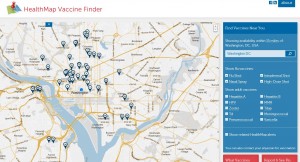
While we hear a lot about the importance of getting a flu shot, there are many other vaccines that are recommended for adults. Starting this month, it will be easier to find all of the vaccinations you need. The HealthMap Vaccine Finder Exit Disclaimer is a free online service that helps you locate nearby vaccine providers (such as pharmacies and health clinics) by entering your address or ZIP Code.

In addition to the flu vaccine, the HealthMap Vaccine Finder (previously called the HealthMap Flu Vaccine Finder) now includes locations that provide 10 other vaccines, allowing you to search for providers who offer the following vaccines: hepatitis A; hepatitis B; HPV (human papillomavirus); MMR (measles, mumps, and rubella); varicella (chickenpox); Td (tetanus and diphtheria); Tdap (tetanus, diphtheria, and pertussis); meningococcal; pneumococcal; and zoster (shingles). This builds on the success of the HealthMap Flu Finder, which lists more than 50,000 locations across the country that offer flu vaccinations. Over 125,000 consumers have used the HealthMap Vaccine Finder since August 2012.

To read more, or to find vaccines near you, go to AIDS.gov.

Almost half of Grindr users engaged in unprotected sex despite knowing better

From Huffington Post Gay Voices:

A new survey focused on gay and bisexual men who use apps such as Grindr, Scruff and Manhunt Grindr users engage in unsafe sex more oftento meet sexual partners found that nearly half had engaged in unprotected sex.

Conducted by New York’s Community Healthcare Network (CHN), “Zero Feet Away: Perpective on HIV/AIDS and Unprotected Sex in Men Who Have Sex With Men Utilizing Location-based Mobile Apps” found that although 80 percent of respondents said they were knowledgable in how the HIV virus was transmitted, 46.4 percent admitted to having bareback sex always, often or sometimes.

The most frequently-cited reason for barebacking among the 725 gay and bisexual men who were surveyed was “with condoms, [sex] does not feel the same.” The poll reportedly received responses from men in Australia, South America, Europe, the United Kingdom, Canada and the U.S.

“Clearly, we’ve come a long way in educating people about HIV and AIDS,” Dr. Freddy Molano, Assistant Vice President of HIV Programs and Services at CHN, said in the report. “Yet among certain populations, HIV/AIDS is on the ride, and that’s alarming.”

Added co-author Renato Barucco: “The survey findings show a clear disconnect between the reasons why men engage in unprotected anal intercourse and the way prevention initiatives attempt to address risk behaviors.”

Read the full survey here.

Health and Human Services releases report of programs to reduce HIV infections among African Americans

From AIDS.gov:

The Department of Health and Human Services (HHS) recently released a report [PDF] describing findings of an interagency collaboration to identify, review, and assess the effectiveness of HHS-funded, discretionary initiatives and programs to reduce HIV infections among African Americans. The report describes relevant prevention programs and initiatives, identifies future opportunities, and provides insights that will help inform strategies to reduce HIV infections among vulnerable African-American populations

The inventory was one of the tasks assigned to HHS in the National HIV/AIDS Strategy (NHAS), which notes that prevention efforts must acknowledge the heavy burden of HIV among Black Americans and target resources accordingly. Based on the most recent data from CDC, African American men and women represent 14 percent of the total U.S. population, but account for a disproportionate 44 percent of all persons living with HIV in the United States.

Read the full article on the AIDS.gov Website.

Allegheny County health director urges flu vaccinations

From the Pittsburgh Post Gazette:

Now that the flu season has officially begun — the Centers for Disease Control and Prevention said so Monday — Allegheny County Health Department Interim Director Ronald E. Voorhees has a message for those still unprotected:

“Get vaccinated. It’s here, and the clock is ticking.”

According to the CDC’s weekly surveillance report published Friday, 48 states and Puerto Rico have reported cases of laboratory-confirmed influenza and, nationally, the percentage of specimens testing positive for influenza is rising fast. Alabama, Louisiana, Mississippi, Tennessee and Texas all are reporting above-normal cases of flu. Such an uptick usually doesn’t happen until after Christmas.

Read more: allegheny-county-health-director-urges-vaccinations-amid-flu-uptick

Not too late to get your yearly flu vaccine

NIVW_web-button_180x150_AABy Ronald Valdiserri, M.D., M.P.H., Deputy Assistant Secretary for Health, Infectious Diseases, and Director, Office of HIV/AIDS and Infectious Disease Policy, U.S. Department of Health and Human Services

***

As daylight hours get shorter and temperatures are falling, we’re not only approaching winter but also flu season. While we can all find ways to enjoy the change of seasons, no one enjoys the flu — a contagious respiratory illness caused by flu viruses spread between people. Seasonal flu is a special concern if you are a person living with HIV (PLWH) since HIV can make your body too weak to fight off the flu. HIV also increases your risk for serious flu-related complications. Experts agree that getting the flu vaccine is the most effective way to prevent the flu.

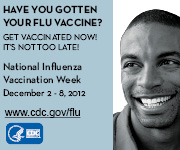
CDC has designated this week as National Influenza Vaccination Awareness Week, so we encourage you to learn more about the seasonal flu and take steps to protect yourself. Here are some resources to help you:

Remember, it is not too late to get your yearly flu vaccine to protect against the flu viruses experts predict will spread this season. As long as flu viruses are spreading and causing illness, vaccination can provide protection against the flu.

Philadelphia FIGHT launches new HIV-prevention project

From the Philadelphia Gay News:

FIGHT’s Jonathan Lax Treatment Center and Youth-Health Empowerment Project are launching [Philadelphia’s] first Pre-Exposure Prophylaxis Program, a prevention initiative aimed at young HIV-negative men who have sex with men. Each participant will also begin a regimen of Truvada, the first-ever drug designed for HIV-prevention, which was originally introduced in 2004. PrEP will consist of in-person group meetings in which the participants will discuss HIV stigma, healthy living, leadership development and other topics. The 15-member group will range in age from 18-29.

Dr. Helen Koenig, physician at the Jonathan Lax Center, along with Noel Ramirez, health-education program coordinator at the Dorothy Mann Center, will spearhead the project. Koenig noted that the center has seen an influx of young men of color coming in, newly diagnosed with HIV. She hopes that PrEP will help stymie this trend.

Read more: PGN-The Philadelphia Gay News

The U.S. Food and Drug Administration approves a new once-a-day combination pill to treat HIV

From the FDA:

The U.S. Food and Drug Administration today approved Stribild (elvitegravir, cobicistat, emtricitabine, tenofovir disoproxil fumarate), a new once-a-day combination pill to treat HIV-1 infection in adults who have never been treated for HIV infection.

Stribild contains two previously approved HIV drugs plus two new drugs, elvitegravir and cobicistat. Elvitegravir is an HIV integrase strand transfer inhibitor, a drug that interferes with one of the enzymes that HIV needs to multiply. Cobicistat, a pharmacokinetic enhancer, inhibits an enzyme that metabolizes certain HIV drugs and is used to prolong the effect of elvitegravir. The combination of emtricitabine and tenofovir disoproxil fumarate, approved in 2004 and marketed as Truvada, blocks the action of another enzyme that HIV needs to replicate in a person’s body. Together, these drugs provide a complete treatment regimen for HIV infection.

“Through continued research and drug development, treatment for those infected with HIV has evolved from multi-pill regimens to single-pill regimens,” said Edward Cox, M.D., M.P.H., director of the Office of Antimicrobial Products in FDA’s Center for Drug Evaluation and Research. “New combination HIV drugs like Stribild help simplify treatment regimens.”

Read the full FDA press release on the FDA Website.

FDA gives green light to OraQuick in-home HIV test

Health regulators on Tuesday said they approved OraSure Technologies Inc’s in-home test for HIV, making it the first over-the-counter, self-administered test for the virus that causes AIDS.

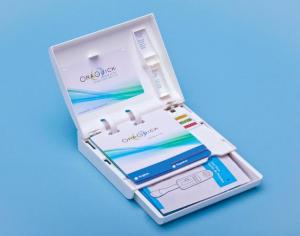
The Food and Drug Administration gave its green light to the OraQuick In-Home HIV Test, which within 20 to 40 minutes provides results from an oral fluid sample taken by swabbing the upper and lower gums inside the mouth.

The company said the test — already approved for use by trained technicians — will be available starting in October at more than 30,000 retailers and online. The price will be set closer to the launch date, it said.

The FDA cautioned that a positive result does not mean an individual is definitely infected with HIV, but rather that additional testing should be done in a medical setting to confirm the result.

About 1.2 million people in the United States are living with HIV infection, but one in five are not aware of it, according to estimates from the Centers for Disease Control and Prevention. About 50,000 new people are infected with HIV each year, often from people who may not know they have the virus, the FDA said.

“Knowing your status is an important factor in the effort to prevent the spread of HIV,” said Dr. Karen Midthun, director of the FDA’s Center for Biologics Evaluation and Research. “The availability of a home-use HIV test kit provides another option for individuals to get tested so that they can seek medical care, if appropriate.”

An FDA advisory committee of outside experts voted unanimously in favor of the test in May, saying its ability to prevent new HIV infections and link people to medical care and social services outweighed the risk of false results.

Clinical trials for the test showed it was accurate 92 percent of the time in diagnosing people who had HIV — meaning one out of every 12 test results would be a false negative.

False negatives are of particular concern because they could lead HIV-positive individuals to take fewer precautions, raising the danger that they will engage in unprotected sex.

The test accurately gave a negative result for those without HIV in 99.98 percent of cases, meaning there would be only one false positive result out of every 5,000 tests.

“We set out with a clear purpose – to dramatically impact the number of people getting tested for HIV nationwide,” Douglas Michels, OraSure’s chief executive, said in a statement.

“Today’s FDA approval of OraQuick brings us much closer to accomplishing that goal.”

(Reuters) – (By Bill Berkrot and Anna Yukhananov; Reporting by Bill Berkrot in New York and Anna Yukhananov in Washington; Editing by Maureen Bavdek, Jim Marshall and John Wallace)

CDC trying free HIV tests in drugstores

ATLANTA (AP) _ Getting an AIDS test at the drugstore could become as  common as a flu shot or blood pressure check, if a new pilot program takes off.

The $1.2 million program will offer the free rapid HIV tests at pharmacies and in-store clinics in 24 cities and rural communities, the Centers for Disease Control and Prevention announced Tuesday.

“We believe we can reach more people by making testing more accessible and reduce the stigma associated with HIV,” Dr. Kevin Fenton, who oversees the agency’s HIV prevention programs, said in a statement.

The tests are already available at seven places, including Washington, D.C., Oakland, California, and an Indian health service clinic in Montana. The CDC will soon pick 17 more locations.

The HIV test is a swab inside the mouth; it takes about 20 minutes for a preliminary result. The test maker says it’s correct 99  percent of the time. If the test is positive for the AIDS virus, pharmacy employees will refer customers to a local health department or other health care providers for a lab blood test to confirm the results, counseling and treatment. The workers are expected to deliver the news face-to-face and give customers privacy, the CDC said.

An estimated 1.1 million Americans are infected with HIV, but as many as 20 percent of them don’t know they carry the virus, according to the CDC. It can take a decade or more for an infection to cause symptoms and illness.

Since 2006, the CDC has recommended that all Americans ages 13 to 64  get tested at least once, not just those considered at highest risk: gay men and intravenous drug users. But fewer than half of adults   younger than 65 have been tested, according to the agency’s most recent statistics.

It’s important to know about infection not only for treating the condition but also to take steps to prevent spreading it to others. An HIV diagnosis used to be a death sentence, but medications now allow those infected to live longer and healthier lives.

On special occasions, health organizations have sent workers to some  drugstores to offer HIV testing. This week, Walgreens, the  nation’s  largest chain of pharmacies, is teaming with health departments and AIDS groups to offer free tests in 20 cities.

But in that program, health professionals conduct the tests and deliver the news. The CDC program aims to train pharmacy staff to test and deliver the results themselves.

“I’m excited. It’s such a new and novel thing for us,” said  Sarah  Freedman, who manages a Walgreens in Washington, D.C., that is participating in the pilot program.

At her pharmacy, prominent signs advertise the test, which is then done in a private room. The pharmacy has also taken steps to let a   customer discreetly request the test, putting out stacks of special test request cards (they look like business cards) at George Washington University and nearby businesses. Anyone seeking a test can simply hand the card to the clerk, she said.

Only three or four customers have gone through with a test in the first few weeks.

“We get a lot of questions,” she said. “Usually they get the information and they go and sit on it and think about it.”

The drugstores are expected to keep the test confidential.  Pharmacy workers are to refer customers with positive tests to counseling and other services.

When the project ends next summer, CDC officials will analyze what worked well and what didn’t, said Paul Weidle, the epidemiologist who is heading up the project.

The program carries both promise and potential pitfalls, said Julie Davids, a longtime advocate who now works for the AIDS Foundation of Chicago.

More testing is a plus, she said. And even if they don’t get a free test, signs in the drugstores may prompt people to get tested at a doctor’s office or clinic where they feel more comfortable, said Davids.

But Davids said pharmacies more used to handling cholesterol screenings might have difficulty responding to patients who learn in a drugstore they’re HIV-positive.

“A person may freeze up and fall apart later,” or get emotional on the spot and even talk about suicide, she said.

In addition to Freedman’s store, a second Walgreens in Washington is  offering the test, as well as branches in Chicago and Lithonia, Georgia. The other sites are East Pines Pharmacy in Riverdale, Maryland, Mike’s Pharmacy in Oakland, California and a federal Indian Health Service location in Billings, Montana.

Each location will get enough tests to check 200 to 300 people.  Made  by OraSure Technologies Inc., the $17.50 test is the only government-approved rapid HIV test that uses saliva. Other rapid tests on the market analyze a finger-prick blood sample. The tests are used   routinely in doctor’s offices, hospitals and clinics.

The OraSure swab test’s stick-like testing device is used to wipe the inside of the mouth, then it is put in a solution, said company spokesman Ron Ticho. If two lines appear, that indicates a positive test.

The company is seeking government approval to sell it over-the-counter for home testing. A decision is expected later this year.

The test is sold in about 40 countries, including Mexico, Italy, South Korea and South Africa. Ticho said he is not aware of another country where pharmacies routinely offer the testing.

HIV medical providers need to talk about sex with their patients

From the the AIDS Education and Training Center (AETC) Website:

Taking responsibility for preventing HIV transmission is an important concern for most people with HIV, as well as for their health care providers. Multiple studies have shown that one third to three fourths of HIV medical providers do not ask their patients about sexual behavior or drug use. However, many HIV-infected individuals report that they want to discuss prevention with their health care providers. Each patient visit presents an opportunity to provide effective prevention interventions, even in busy clinical settings.

It is clear that information alone, especially on subjects such as sexual activity and drug use, cannot be expected to change patients’ behavior. However, health care providers can help patients understand the transmission risk of certain types of behavior and help patients establish personal prevention strategies (sometimes based on a harm-reduction approach) for themselves and their partners. Some patients may have difficulty adhering to their safer sex goals. In these cases, referrals to mental health clinicians or other professional resources such as prevention case management may be helpful.

Patient-education needs are variable and must be customized. Providers must assess the individual patient’s current level of knowledge as part of developing a prevention plan. All the information that a patient needs cannot be covered during a single visit. A patient’s prevention strategy should be reinforced and refined at each visit with the clinician. Clinicians also should ask patients questions to determine life changes (e.g., a new relationship, a breakup, or loss of a job) that may affect the patient’s sexual or substance use practices. If the patient can read well, printed material can be given to reinforce education in key areas, but it cannot replace a direct conversation with the clinician.

Find out more on the AETC Website.

May is Hepatitis Awareness Month

From the CDC Website:

Hepatitis B and Hepatitis C can become chronic, life-long infections which can lead to liver cancer. Millions of Americans are living with chronic viral hepatitis, and many do not know they are infected. CDC’s Division of Viral Hepatitis is leading a  national education initiative called Know More: Hepatitis.  The initiative aims to decrease the burden of  chronic viral hepatitis by increasing awareness about this hidden epidemic and  encouraging people who may be chronically infected to get tested.

Online Hepatitis  Risk Assessment

Know More Hepatitis is being featured in May as part of Hepatitis  Awareness Month.  This year, May 19th  will serve as the first ever Hepatitis Testing Day in the United States. Since chronic  hepatitis often does not cause any symptoms until serious liver damage has been  done, testing for hepatitis is crucial. Find out if you should be tested by taking a 5 minute  online Hepatitis  Risk Assessment.

The  online assessment is designed to determine an individual’s risk for viral  hepatitis and asks questions based upon CDC’s guidelines for testing and  vaccination.  The Hepatitis Risk  Assessment allows individuals to answer questions privately, either in their  home or in a health care setting, and print their recommendations to discuss  with their doctor.

Go to the Centers for Disease Control and Prevention Website for the full story.

“Truvada” moves toward FDA approval for HIV prevention

From the LA Times:

The Food and Drug Administration said Tuesday that Gilead Sciences’ Truvada appears to be safe and effective for HIV prevention. It concluded that taking the pill daily could spare users “infection with a serious and life-threatening illness that requires lifelong treatment.”

On Thursday, a panel of FDA advisors will vote on whether Truvada should be approved as a preventive treatment for people who are at high risk of contracting the human immunodeficiency virus through sexual intercourse. The FDA is not required to follow the advice of its panels, but usually does.

An estimated 1.2 million Americans have HIV, which attacks the immune system and, unless treated with antiviral drugs, develops into AIDS, a fatal condition in which the body cannot fight off infections. If Truvada is approved, it would be a major breakthrough in the 30-year campaign against the AIDS epidemic. No other drugs have been proven to prevent HIV and a vaccine is believed to be decades away.

Gilead Sciences Inc., based in Foster City, Calif., has marketed Truvada since 2004 as a treatment for people who are infected with the virus. The medication is a combination of two older HIV drugs, Emtriva and Viread. Doctors usually prescribe the medications as part of a drug cocktail that makes it harder for the virus to reproduce. Patients with low viral levels have reduced symptoms and are far less likely to develop AIDS.

Researchers first reported in 2010 that Truvada could prevent people from contracting HIV. A three-year study found that daily doses cut the risk of infection in healthy gay and bisexual men by 44%, when accompanied by condoms and counseling. Another study found that Truvada reduced infection by 75% in heterosexual couples in which one partner was infected with HIV and the other was not.

Read the full article on the LA Times Website.

LGBT Cancer Network Expands Resources Directory Beyond NYC

The National LGBT Cancer Network, the first program in the country to address the needs of all lesbian, gay, bisexual and transgender (LGBT) people with cancer and those at risk, announced this past November that is has expanded its directory of LGBT-friendly cancer screening facilities beyond New York City.

The directory now covers facilities in California, Colorado, Connecticut, the District of Columbia, Florida, Georgia, Illinois, Maine, Maryland, Massachusetts, Minnesota, Oregon, Pennsylvania and Vermont.

You can search the directory for screenings in Pennsylvania on the Cancer Network Directory.