
Pennsylvania still experiencing alarming increase in new syphilis infections

As of May 2016, Pennsylvania is still experiencing an alarming increase in syphilis cases, primarily among men who have sex with men (MSM). Over the last 5 years, Pennsylvania has experienced a 90% increase in syphilis infections. Most were men under the age of 30.

Syphilis is a sexually transmitted infection. If it goes untreated, it can lead to serious health problems including paralysis, blindness, and dementia. In the late stages, the disease can damage internal organs and can result in death.  In its early stages, syphilis is 100% curable with simple antibiotics.

Syphilis can be transmitted through oral sex and although condoms can help prevent infection, they’re not an absolute guarantee against it.  

You can get syphilis and not have any symptoms, so the only way to know you’re infected is to get a simple blood test. As a result of the increase in syphilis cases, the Pennsylvania Department of Health recommends that all sexually active MSM get a routine syphilis test every 6 months. Several locations around the state have free syphilis testing, click on this link to find testing near you: hivtest.cdc.gov.

To find out more about Syphilis, go to www.cdc.gov/std/syphilis/stdfact-syphilis.htm

You can also email medical help at the University of Pittsburgh’s Graduate School of Public Health by sending a message to rgy2@pitt.edu.

Social apps responsible for increase in STDs?

From the Pittsburgh Post-Gazette

About two years ago, Harold Wiesenfeld, medical director of Allegheny County’s sexually transmitted disease and HIV program, started hearing something from some of his patients that troubled him.

“They were volunteering that many of their partners were unknown because they met them through dating apps and it was anonymous,” he said. Apps like Tinder, OkCupid and Grindr that allow people to scroll through dozens or even hundreds of photos of possible potential dates in a given area within a matter of minutes.

Social apps cause rise in STDsMost troubling, though, was that many of those patients in his private obstetrics and gynecology practice at Magee-Womens Hospital of UPMC believed they had contracted their STD from those anonymous partners they met on a dating app.

This occurred as Allegheny County was seeing a sharp and steady rise in cases of Gonorrhea (up 28 percent) and Chlamydia (up 35 percent) from 2006 to 2014 that concerned and worried health officials. Of even bigger concern is the rapid increase in just a few years of Syphilis, which is up 150 percent since 2009. Cases in that time jumped from 27 to 68 for the disease that can have long-term health concerns, particularly for women who want to get pregnant, and their fetus if they are pregnant.

It has become a big enough issue in Allegheny County, that in the last year, Dr. Wiesenfeld has made asking about the dating apps a standard question for his patients.

“Across the country we are in what we consider an STD epidemic, especially with Syphilis and its health implications,” Dr. Wiesenfeld said.

While some of the increase might be attributed to better screening and testing for the diseases, “many of us STD researchers are concerned with the popularity of these apps in facilitating more casual sexual encounters,” he said.

Read the full article.

“Half of black men who have sex with men (MSM) will be diagnosed with HIV during their lifetime”

From the Centers for Disease Control and Prevention (CDC)…

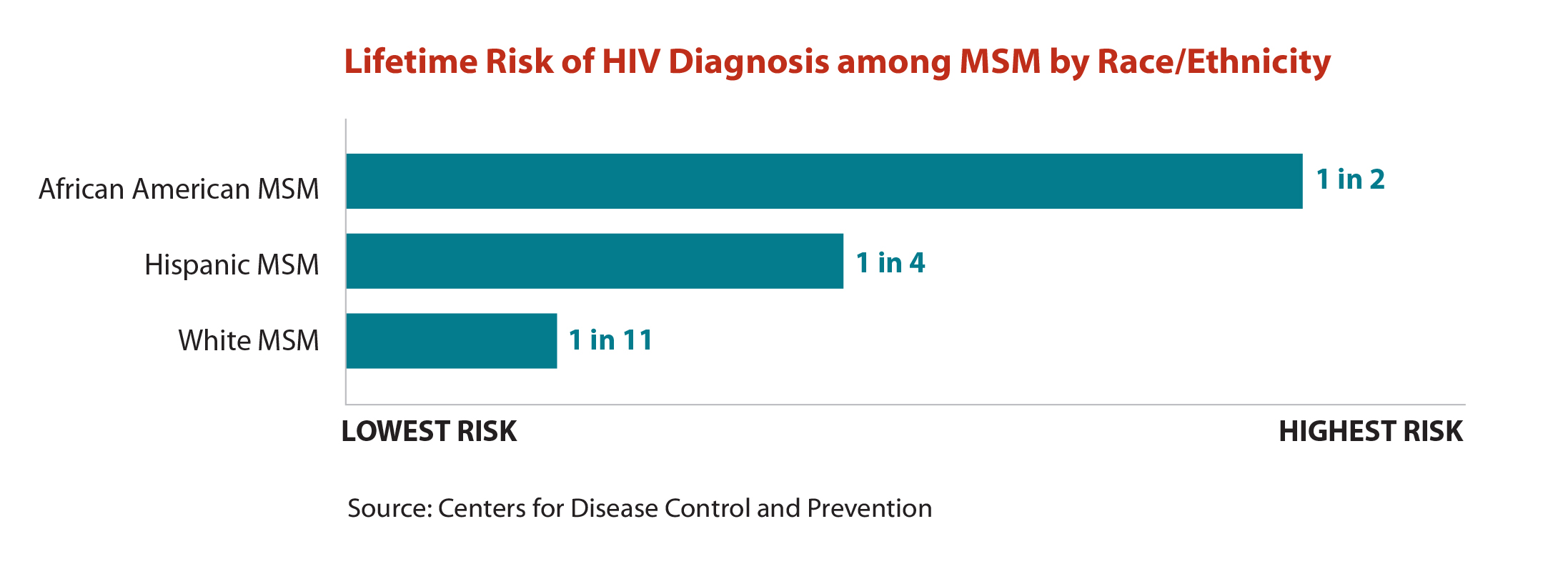
If current HIV diagnoses rates persist, about 1 in 2 black men who have sex with men (MSM) and 1 in 4 Latino MSM in the United States will be diagnosed with HIV during their lifetime, according to a new analysis by researchers at the Centers for Disease Control and Prevention (CDC).

The study, presented today at the Conference on Retroviruses and Opportunistic Infections in Bostonprovides the first-ever comprehensive national estimates of the lifetime risk of an HIV diagnosis for several key populations at risk and in every state.

croi_lifetime_risk_msm_race_ethnicity

“As alarming as these lifetime risk estimates are, they are not a foregone conclusion. They are a call to action,” said Jonathan Mermin, M.D., director of CDC’s National Center for HIV/AIDS, Viral Hepatitis, STD, and Tuberculosis Prevention. “The prevention and care strategies we have at our disposal today provide a promising outlook for future reductions of HIV infections and disparities in the U.S., but hundreds of thousands of people will be diagnosed in their lifetime if we don’t scale up efforts now.”

Read the full article on the CDC’s Website.


Vitamin D sufficiency may speed up immune recovery during HAART

From medicalnewstoday.com

vitimin D aids HARRTThere are an estimated 33 million people infected with HIV worldwide – 1.2 million of them in the US. The advent in 1996 of highly active antiretroviral therapy (HAART) – a combination of different classes of medications taken daily – means that for many patients who have access to the medication, what was once a fatal diagnosis can now be managed as a chronic disease.
For their study, Prof. Ezeamama and colleagues examined 18 months of data for 398 HIV-positive adults on HAART.

The data included a measure of participants’ vitamin D levels at the start of the trial (baseline) and their CD4 cell counts at months 0, 3, 6, 12 and 18.

In their analysis, the researchers looked at how the changes in CD4 cell counts related to the baseline levels of vitamin D over the study period.

They found that participants with sufficient levels of vitamin D at baseline recovered more of their immune function than participants with vitamin D deficiency.

Read the full story here.

Gonorrhea rising among gay and bi men

From aidsmeds.com

Diagnoses of gonorrhea among men who have sex with men are apparently rising in the United States. Centers for Disease Control and Prevention (CDC) researchers, in order to determine demographic information, interviewed a random sample of individuals diagnosed with the sexually transmitted infection (STI) in 12 areas across the country between 2010 and 2013. The researchers then used census and Gallup opinion polling data to estimate the respective sizes of the U.S. MSM, heterosexual male, and female populations by age group at the state, county and city levels.

In 2010, there were an estimated 1,169.7 diagnoses of gonorrhea per 100,000 MSM. In other words, about 1.17 percent of MSM contracted the STI that year. This rate rose 26 percent in three years, hitting 1,474.4 diagnoses per 100,000 MSM, or 1.47 percent, in 2013. Looking at MSM according to age bracket, those between 25 and 29 years of age  had the highest diagnosis rate: 3,400 per 100,000, or 3.4 percent.

During the study period, gonorrhea diagnosis rate among MSM was between 10.7 and 13.9 times higher than that of women or heterosexual men. While the researchers speculate that the rising gonorrhea rates may be indicative of a national trend, they caution that the data in this study is not nationally representative.

Read the full article.

Exactly zero men on PrEP contract HIV in 2.5-year study


From hivplusmag.com…

Zero men on PrEP get HIV new study findsAfter two and a half years of trials, a new study has found no new HIV infections among a group of people on pre-exposure prophylaxis (PrEP). For 32 months, researchers at the Kaiser Permanente Medical Center in San Francisco tracked the health of over 600 people as they used Truvada daily to prevent the virus in a real-world setting.

The average age of the study participants was 37, and 99 percent were men who have sex with men. The average length of individual usage was 7.2 months. Members of this group also reported a higher likelihood of having multiple sex partners than those not using PrEP. No one in the study contracted HIV.

Lead author Jonathan Volk, a physician at Kaiser Permanente San Francisco, emphasized that this is the first time such a study has been done in a clinical practice setting at this size. The findings were published Wednesday in Clinical Infectious Diseases, a leading journal of studies on infection disease.

Continue reading.

The medical staff at the Pitt Men’s Study emphasize that PrEP is not a substitute for condoms. It should be used in addition to condoms, to further reduce your risk. It is also important to note that PrEP doesn’t protect against other STDs like syphilis, chlamydia, and gonorrhea. To learn more about PrEP, check out the CDC’s Website. If you have questions about PrEP, you can speak to your doctor. You can also call the PrEP clinic at the University of Pittsburgh Medical Center: (412) 647-0996.

H.I.V. treatment should start at diagnosis, U.S. health officials say

From the New York Times

People with H.I.V. should be put on antiretroviral drugs as soon as they learn they are infected, federal health officials said Wednesday as they announced that they were halting the largest ever clinical trial of early treatment because its benefits were already so clear.

The study was stopped more than a year early because preliminary data already showed that those who got treatment immediately were 53 percent less likely to die during the trial or develop AIDS or a serious illness than those who waited.

The study is strong evidence that early treatment saves more lives, the officials said. Fewer than 14 million of the estimated 35 million people infected with H.I.V. around the world are on treatment now, according to U.N.AIDS, the United Nations AIDS-fighting agency. In the United States, only about 450,000 of the estimated 1.2 million with H.I.V. are on treatment, according to the Centers for Disease Control and Prevention.

“This is another incentive to seek out testing and start therapy early, because you will benefit,” said Dr. Anthony S. Fauci, director of the National Institute for Allergy and Infectious Disease, which sponsored the trial. “The sooner, the better.”

Continue reading on the New York Times.

Advocate.com: 11 bad habits killing LGBT people

From the Advocate.com

ThinkstockPhotos-466033241X633We’re in the midst of LGBT Health Month, a time to take stock of the many health issues specific to our community. While we have plenty of people trying to do harm to us because of our sexual orientation or gender identity, we often don’t do ourselves any favors when it comes to self care. Here are the bad habits we should have given up last century.

New study shows gay and bi men twice as likely to get skin cancer

From USA Today

Gay and bisexual men in the United States are twice as likely as heterosexual men to get skin cancer, a new study shows.

One likely reason: Gay and bisexual men are three times more likely to engage in indoor tanning, according to the study to be presented Friday in San Francisco at a meeting of the American Academy of Dermatology.

The study suggests that anti-tanning messages, most often aimed at young women, need to be broader, says researcher Sarah Arron, an associate professor of dermatology at the University of California, San Francisco. “The primary reason that men and women engage in indoor tanning is because of the cultural association of tanning with a healthy look and overall attractiveness,” Arron says. “We need to dispel the myth of the healthy tan.”

Tanning, whether in the sun or in a tanning bed, can cause skin cancer, including melanoma, the most dangerous kind, according to the U.S. Surgeon General’s office.

Mental health issues put gay and bi men at increased risk for HIV

(Reuters Health) – Gay and bisexual men are at increased risk of acquiring the virus that leads to AIDS if they have mental health problems, according to a new study. What’s more, their risk of acquiring HIV increases with the number of mental health factors they report, researchers found. Past studies have found that mental disorders, ranging from depression to substance abuse, are often seen among men with HIV, but “nothing about whether these factors predict HIV risk behaviors or becoming infected with HIV,” said study leader Matthew Mimiaga, from Harvard Medical School and Massachusetts General Hospital in Boston.

The Centers for Disease Control and Prevention (CDC) estimates that some 1.1 million people in the U.S. are living with HIV. About one case in six is undiagnosed. While the CDC says only about 4 percent of U.S. males have sex with other men, they represent about two-thirds of the country’s new infections. Additionally, it’s known that the lesbian, gay, bisexual and transgender (LGBT) community also suffers from an increased burden of mental health problems.

When two health conditions tend to occur together in one population, researchers call them “syndemic.” For the new study in the Journal of Acquired Immune Deficiency Syndromes, the researchers looked at how five conditions – depression, alcohol abuse, stimulant use, multi-drug abuse and exposure to childhood sexual violence – affect men’s risk of acquiring HIV. They analyzed data on 4,295 men who reported having sex with men within the previous year. The participants were asked about depressive symptoms, heavy alcohol and drug use and childhood sexual abuse.

Read more


CDC annual STD surveillance report: MSM bear a disproportionate burden

From the EdgeMediaNetwork

While anyone can become infected with an STD, certain groups, including young people and gay and bisexual men, are at greatest risk. Gonorrhea and chlamydia primarily affect young people. While surveillance data show signs of potential progress in reducing chlamydia and gonorrhea among young people aged 15-24, both the numbers and rates of reported cases of these two diseases continue to be highest in this group compared to other age groups. 

Both young men and young women are heavily affected by STDs, but young women face the most serious long-term health consequences. It is estimated that undiagnosed STDs cause 24,000 women to become infertile each year. The other group facing the burden of STDs are men who have sex with men (MSM). There has been a troubling rise in syphilis infections among gay, bisexual, and other MSM. Trend data show that MSM account for three quarters (75 percent) of all primary and secondary syphilis cases. 

Primary and secondary syphilis are the most infectious stages of the disease, and if not adequately treated, can lead to long-term infection, which can cause visual impairment and stroke. Syphilis infection can also place a person at increased risk for acquiring or transmitting HIV infection. In fact, available surveillance data indicate that an average of half of MSM with syphilis are also infected with HIV. 

Read the full article here.
Read the CDC report here.

“Syphilis is like the canary in the coal mine for HIV”

From Queerty.com

Think twice before hooking up with that out-of-towner this holiday weekend. And, if you do, be safe.

The CDC has just released reports that number of syphilis infections in the United States jumped a whopping 10 percent from 2012 to 2013, with gay and bisexual men accounting for 75 percent of the increase.

According to the report, 17,357 cases of syphilis were reported last year. That’s 5.5 cases per every 100,000 people.

Dr. Jill Rabin, co-chief of the division of ambulatory care in the Women’s Health Programs-PCAP Services at North Shore-LIJ Health System in New Hyde Park, N.Y., called the rise in syphilis cases “very alarming.”

“Syphilis is like the canary in the coal mine for HIV,” she said. “People are going to be positive for syphilis before they are diagnosed with HIV. This means that there is a potential increase in HIV cases.”

According to MedicalXpress, the sores caused by syphilis make HIV transmission easier. In rare cases, syphilis can lead to serious health problems, including death. Though it’s easy to cure with antibiotics if caught early.

“Having an STD doesn’t mean someone is dirty or broken,” said Fred Wyand, spokesperson for the American Sexual Health Association. “Far from it.”

Wyand urged people not to let the stigma of a STD prevent them from being tested and treated.

“One of the great barriers to having sexual health conversations is the sense of embarrassment. People need to have frank, open conversations,” he said. “It’s not about sex. It’s about health.”

Syphilis on the rise among gay, bisexual men: CDC

From HealthDay.com
By Steven Reinberg

The number of cases of syphilis in the United States jumped 10 percent from 2012 to 2013, with gay and bisexual men accounting for 75 percent of the increase, U.S health officials reported Tuesday.

Rates of another sexually transmitted disease — chlamydia — fell for the first time in 30 years, with more than 1.4 million reported cases in 2013. This represented a 1.5 percent decrease from 2012, according to the U.S. Centers for Disease Control and Prevention.

“There are over 20 million cases of sexually transmitted diseases [STDs] every year in the United States, and they continue to pose a risk of lifelong complications for millions of Americans,” said Dr. Jonathan Mermin, director of CDC’s National Center for HIV/AIDS, Viral Hepatitis, STD, and TB Prevention.

According to the report, 17,357 cases of syphilis were reported in 2013 — a rate of 5.5 per 100,000 people.

There are a variety of reasons that put gay and bisexual men at high risk for syphilis, said Mermin.

“Some are the high number of sexual partners and sexual networks that create a vicious cycle where the prevalence of syphilis is higher. And that leads to higher incidence, which leads to higher prevalence, and that cycle can increase the frequency of infection,” he said.

Continue reading on HealthDay.

Smoking doubles risk of death for patients taking HIV therapy

From aidsmap.com

Smoking doubles the mortality risk for people with HIV taking antiretroviral therapy, a study published in AIDS shows. Smokers had an increased risk of death from cardiovascular disease (CVD) and non-AIDS-related cancers, and the life expectancy of a 35-year-old man with HIV was reduced by almost eight years due to smoking. “Smoking was associated with a two-fold increase in mortality,” comment the authors. “More than a third of all non-AIDS related malignant deaths were from lung cancer and all deaths from lung cancer were in smokers.”

The benefits of not smoking were clear. HIV-positive non-smokers who were doing well on antiretroviral therapy had a similar life expectancy to non-smokers in the general population.

With the right treatment and care, people living with HIV can have a normal life expectancy. However, mortality rates remain higher among people with HIV compared to the background population. The reasons for this are unclear, but important causes of death among people with HIV now include smoking-related diseases such as heart and lung complaints and non-AIDS-related malignancies.

Investigators therefore wanted to determine the association between smoking and mortality risk among people taking HIV therapy.

Continue reading on aidsmap.com.

Health Alert – Syphilis infections among gay and bi men growing at an alarming rate

The Allegheny County Health Department has documented an alarming, ongoing increase in Syphilis infections among men who have sex with men in the greater Pittsburgh area. Syphilis is a sexually transmitted disease that, if untreated, can cause serious health problems. You can get Syphilis and not have any initial symptoms so the only way to know you’re infected is to get a simple blood test. Syphilis is 100% curable.

The Health Department suggests all sexually active gay and bi men get tested for Syphilis. To find free testing near you, go to https://gettested.cdc.gov/.

You can also call the Allegheny Health Department to find out more about getting a free test: (412) 578-8332.

___

To find out more about Syphilis go to the CDC Website at http://www.cdc.gov/std/syphilis/

To read the official Allegheny Health Department press release, Syphilis health alert November 17 2014.

The treatment cascade in the United States – good in Ryan White programmes, but overall picture for gay men is poor

From aidsmap.com

People living with HIV in the United States who receive their care through the Ryan White HIV/AIDS Program have good rates of retention and virological suppression, investigators report in the online edition of Clinical Infectious Diseases. Of the patients seen at least once in 2011, some 82% were retained in care and 73% achieved virological suppression.

These outcomes dwarf those seen for most people living with HIV in the US – previous reports have estimated that as few as 40% were retained in care and 19% had achieved virological suppression.

A second new report focuses on gay, bisexual and other men who have sex with men, demonstrating that outcomes continue to be unacceptably poor in this group. Of those who have ever been diagnosed with HIV, 51% were retained in care and 42% achieved virological suppression.

However, both new studies found that outcomes were poorer in younger people, African American people and some other ethnic groups.

Continue reading on aidsmap.com

Kaiser Family Foundation releases new alarming report reflecting gay and bisexual men’s attitudes, knowledge, and experiences with HIV/AIDS

From Gay Men’s Health Crisis

On Thursday, September 25, 2014, the Kaiser Family Foundation released a new alarming report reflecting gay and bisexual men’s attitudes, knowledge, and experiences with HIV/AIDS and new HIV therapies in the United States. Their survey on HIV/AIDS in the lives of gay and bisexual men in the United States reports that 56% of gay and bisexual men are not personally concerned about HIV or AIDS affecting them and 30% have never been tested for HIV.

“HIV/AIDS might not be a death sentence anymore, but there are still 50,000 new infections in the United States every year-and gay and bisexual men are still among those most at risk,” said GMHC CEO Kelsey Louie. ” The Kaiser Family Foundation study is a needed wake-up call that communicating the correct information about HIV and AIDS to the public has never been more critical. We must do more to educate our gay and bisexual men about how HIV and AIDS can affect them, and how life-saving medications like PrEP and PEP can help them prevent HIV infections and stay healthy.”

Additional Background:
Eight out ten gay and bisexual men surveyed also said that they have heard a little or nothing about PrEP, a life-saving medication that can prevent HIV-infections. Additional findings from the survey can be found here. The Foundation’s survey comes on the heels of a new CDC report showing that 58% of gay and bisexual men diagnosed with HIV are not virally suppressed.

Health Alert for men in Pennsylvania – Syphilis on the rise again

The Pennsylvania Department of Health in conjunction with the Allegheny County Health Department (ACHD) has documented an alarming increase in Syphilis cases, primarily among men who have sex with men (MSM) in Allegheny County. As of September 10, 2014, the ACHD has reported 67 cases of early Syphilis which now exceeds the total of 63 cases reported in all of 2013. Here is a breakdown of the data:
·       54% of the cases have been reported individuals under the age of 30
·       96% of the cases reported were male
·       75% of the male cases reported with MSM risk factors (had sex with other men)
·       39% of the male cases were co-infected with HIV
You can get Syphilis and not have any symptoms so the only way to know you’re infected is to get tested with a simple blood test.   And if you do have symptoms, note that Syphilis has any number of symptoms that can look like symptoms from other diseases. One example is a painless sore that you would get after you are first infected can be confused for an ingrown hair, zipper cut, or other seemingly harmless bump.  Another example is a rash over the body that can sometimes (but not always) involve the palms of the hands and the soles of the feet. As a result of the uptick in Syphilis cases, we are recommending that all sexually active MSM get a Syphilis test. The PA Department of Health as well as the Centers for Disease Control recommend that all sexually active MSM receive full STD screening (including HIV) annually.  The Pitt Men’s Study offers testing for syphilis (as well as testing for Gonorrhea and Chlamydia) as part of your routine study visit.  Free testing is also available at the Allegheny County Department of Health.  

To find testing near you, check out the CDC testing database at http://hivtest.cdc.gov/

To find out more about Syphilis specifically, go to http://www.cdc.gov/std/syphilis/stdfact-syphilis.htm

To subscribe to Pitt Men’s Study Health Alerts, send an email to rgy2@pitt.edu with the word “subscribe” in the subject line.

To find out more about Health Alerts, go to http://pittmensstudy.com/health-alerts/

Smoking and HIV – One man’s story


Smoking is especially dangerous for people who are living with HIV, the virus that can cause AIDS. Brian learned that lesson the hard way, when he had a stroke—a brain attack—at age 43. In this video, Brian talks about surviving HIV-related medical problems—then nearly losing his life because of smoking.  See All Brian’s videos.

And from LOGO online…

Smoking now leads to more deaths in the LGBT community than HIV according to the Centers for Disease Control, which also reports that while 20.5% of heterosexuals smoke, 30.8% of  gay people use tobacco products. “We know that approximately one million LGBT people [in the U.S.] will die early from tobacco-related causes,” says Dr. Scout from the Network for LGBT Health Equity. “We want to save those lives instead.”

I you’re HIV-positive and smoke, the combination can take even more years off your life: According to the Network for LGBT Health Equity, being HIV-positive takes an average of 5.1 years off one’s life, but people who smoke and have HIV die 12.3 years earlier on average. Yet the smoking rate is two to three times higher among adults who are HIV-positive than in the general public.


Truvada as pre-exposure prophylaxis (PrEP) against HIV takes about a week to be effective in preventing infection

From aidsmeds.com

Truvada (emtricitabine/tenofovir) as pre-exposure prophylaxis (PrEP) against HIV takes an estimated seven days to reach full efficacy and may protect for nearly a week afterward, the National AIDS Treatment Advocacy Project (NATAP) reports. But those taking PrEP should not assume these are hard facts at this time. Presenting their findings at the 15th International Workshop on Clinical Pharmacology of HIV and Hepatitis Therapy in Washington, DC, researchers conducted an analysis of 11 men and 10 women who took daily Truvada as PrEP for 30 days and then, after stopping the drug, remained in an additional 30 days of follow-up.

Continue reading on aidsmeds.com.