Gay social app creators give attention to health and social issue

From the Huffington Post

by 

Nowadays there seems to be a mobile app for everything, including dating.

Long before my last breakup, I deleted Grindr, a smartphone app that is a household name in most gay circles, from my phone. Call me old-fashioned, but I wanted to meet people face-to-face. I found it creepy that the application pinpointed my exact location and told perfect strangers how close I was to them, and there was something seedy about texting headless torsos on my little phone’s screen. Even when I was bored, I thought that Grindr simply lacked the kind of fun and sophistication that piqued my interest. Moreover, I had long given up on dating sites such as Adam4Adam, Manhunt and even Gay.com; they’d started to have the feel of a bathhouse or a seedy bar. I decided that there simply was not a market in online dating for those who wanted to meet decent people to chat with.

Was I the last gay man on Earth who did not want to hook up? I was parched for conversation with other gay men. Sure, I have a sexual appetite, but I do draw a line sometime. And then, like a ray of sunshine, a friend suggested that I look into Hornet. “I only have it because I’m bored, but it is pretty awesome and a little like Facebook,” said my friend.

After incredulously scolding my friend for using a what I thought was a gay hookup app while in a relationship, I downloaded it. Incredibly, Hornet was different right off the bat. Not only was the interface user-friendly, but users can literally search the world for someone to talk to and not pay a dime for the service. People were using the app to address social issues like knowing one’s HIV status. I was intrigued.

Read the rest of the article on the Huffingon Post Website.
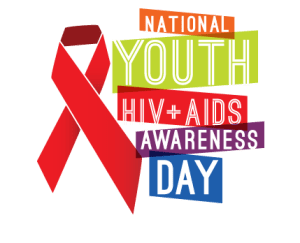
April 10th is National Youth HIV & AIDS Awareness Day

nyhaadcolorlogoNational Youth HIV & AIDS Awareness Day is a day to educate the public about the impact of HIV and AIDS on young people as well as highlight the amazing work young people are doing across the country to fight the HIV & AIDS epidemic.

Today’s young people are the first generation who have never known a world without HIV and AIDS. In the United States, one in four new HIV infections is among youth ages 13 to 24. Every month 1,000 young people are infected with HIV and over 76,400 young people are currently living with HIV across the country. While there has been much talk about an AIDS-Free Generation, we know that is not possible without our nation’s youth. Young people and their allies are determined to end this epidemic once and for all and this day is a way to acknowledge the great work young people are already engaging in to do so.

National Youth HIV & AIDS Awareness Day will be celebrated all across the country. There will be events hosted by various organizations and individuals in high schools, colleges, churches, community centers and more! There also will be opportunities for online participation.

To find out more about the National Youth HIV & AIDS Awarness Day, check out amplifyyourvoice.org

CDC expands Let’s Stop HIV Together campaign™, launches Spanish version

From AIDS.gov

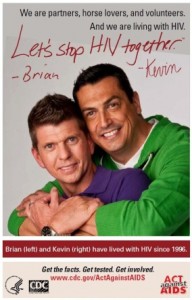
spanish campaignThis month, the Centers for Disease Control and Prevention expanded the national HIV awareness and anti-stigma campaign, Let’s Stop HIV Together, including the launch of a Spanish-language version of the campaign, Detengamos Juntos el VIH. The campaign now includes new participants, more materials in both Spanish and English, and HIV awareness and testing information in Spanish through the new website. Campaign materials are available on the CDC’s Act Against AIDS website. New English materials available on the campaign website include:

  • PSA for TV featuring Jamar Rogers from NBC’s The Voice
  • 4 personal video stories
  • 15 campaign posters
  • Brochure

New Spanish materials on the Spanish-language version of the Act Against AIDS website include:

  • Public Service Announcements (PSAs) for radio and TV
  • 3 personal video stories
  • 12 campaign posters
  • Brochure and palm card

HIV is still the #1 health concern for gay men

From queerty.com…

A lot of gay men might talk like they’re not worried about HIV, but it still ranks as our number one health concern, according to a new study out of Hunter College.

“The fear is that gay men are tired of hearing about how to prevent HIV, and because of new treatment options, HIV isn’t seen as a big deal anymore,” says Dr. Christian Grov, a researcher at Hunter’s Center for HIV Educational Studies and Training (CHEST).

With a goal to see if men who sleep with men were experiencing such HIV-prevention fatigue, CHEST interviewed more than 650 gay and bisexual men at clubs, gay bars and bathhouses about their health concerns. Interviewees were asked to rank HIV transmission as compared to  smoking, body-image issues, mental health and drug/alcohol use.

HIV/STDs was ranked as the top concern, with mental health and substance abuse tying for second place. “These findings are promising for HIV prevention providers because they suggest many gay and bisexual men still recognize HIV as a top issue for the gay community,” says Grov.

Full story here: www.queerty.com/

Read more at www.queerty.com/study-gay-men-rank-their-top-five-health-concerns

LGBT invisibility in health care

From the Huffington Post…

Until very recently, lesbian, gay, bisexual and transgender (LGBT) people have been invisible in health care. Most providers do not ask about sexual orientation or gender identity, nor are they trained in the unique health care needs of LGBT people or the health disparities they experience. Many LGBT patients are not “out” to their providers; as a result, they are not screened for issues that may disproportionately affect LGBT people. Moreover, sexual orientation isn’t just about identity. For example, a recent study found that nearly 10 percent of men who identified as straight had had sex with another man in the past year — and these men were less likely to use condoms than men who identified as gay. This underscores the need to ask questions about sexual behavior as well as sexual identity.

[…]Asking about sexual orientation and gender identity in clinical settings is a critical step that will enhance our knowledge of LGBT population health and improve patient-provider interactions. There are important health reasons to ask about sexual orientation and gender identity. For example, providers who know that a patient is a sexually active gay man can warn him about a recent syphilis outbreak and test him for sexually transmitted infections more common among gay men.

Read the full article on the Huffington Post.

Almost half of Grindr users engaged in unprotected sex despite knowing better

From Huffington Post Gay Voices:

A new survey focused on gay and bisexual men who use apps such as Grindr, Scruff and Manhunt Grindr users engage in unsafe sex more oftento meet sexual partners found that nearly half had engaged in unprotected sex.

Conducted by New York’s Community Healthcare Network (CHN), “Zero Feet Away: Perpective on HIV/AIDS and Unprotected Sex in Men Who Have Sex With Men Utilizing Location-based Mobile Apps” found that although 80 percent of respondents said they were knowledgable in how the HIV virus was transmitted, 46.4 percent admitted to having bareback sex always, often or sometimes.

The most frequently-cited reason for barebacking among the 725 gay and bisexual men who were surveyed was “with condoms, [sex] does not feel the same.” The poll reportedly received responses from men in Australia, South America, Europe, the United Kingdom, Canada and the U.S.

“Clearly, we’ve come a long way in educating people about HIV and AIDS,” Dr. Freddy Molano, Assistant Vice President of HIV Programs and Services at CHN, said in the report. “Yet among certain populations, HIV/AIDS is on the ride, and that’s alarming.”

Added co-author Renato Barucco: “The survey findings show a clear disconnect between the reasons why men engage in unprotected anal intercourse and the way prevention initiatives attempt to address risk behaviors.”

Read the full survey here.

A Q&A with Dr. Ron Stall regarding gay men’s health

Stall-hivision-gay-mens-health-0541-234x300From BETA online:

Dr. Ron Stall, Professor of Public Health at the University of Pittsburgh, wants prevention efforts to leverage gay men’s strengths rather than focus solely on issues that put them at risk.

Stall’s work with the Urban Men’s Health Study uncovered “syndemics” among gay men: overlapping psychosocial health issues that have an additive effect. Of the health problems that overburden gay men, Stall observes, HIV/AIDS may only be the most recognized; according to his research, the disproportionately high HIV prevalence among men who have sex with men (MSM) goes hand in hand with documented higher rates of substance use, clinical depression, partner violence, and childhood sexual abuse.

At the same time, however, research by Stall and his colleagues uncovered “resiliencies” that help protect gay men’s health, such as the capacity to resolve substance use problems over time and the ability to remain HIV negative despite having experienced syndemic conditions that would ordinarily increase their HIV risk.

Tapping into these resiliencies, says Stall, could inform HIV-prevention and wellness interventions that truly resonate with gay men and help them keep themselves and their partners healthy and happy.

Read the interview on BETA.

Family Acceptance Project

The Family Acceptance Project, a San Francisco program aimed at reducing familial rejection of transgender, bisexual, lesbian, and gay youth, was named a “Promising Practice” at an October conference sponsored by the Center for Reducing Health Disparities at the University of California, Davis, School of Medicine, and the Latino Mental Health Concilio.

Researchers found, essentially, that supportive and accepting family members can help reduce health disparities, including HIV risk, among LGBT Latino youth and young adults. For more information on the Family Acceptance Project’s work, visit FamilyProject.SFSU.edu.

Health and Human Services releases report of programs to reduce HIV infections among African Americans

From AIDS.gov:

The Department of Health and Human Services (HHS) recently released a report [PDF] describing findings of an interagency collaboration to identify, review, and assess the effectiveness of HHS-funded, discretionary initiatives and programs to reduce HIV infections among African Americans. The report describes relevant prevention programs and initiatives, identifies future opportunities, and provides insights that will help inform strategies to reduce HIV infections among vulnerable African-American populations

The inventory was one of the tasks assigned to HHS in the National HIV/AIDS Strategy (NHAS), which notes that prevention efforts must acknowledge the heavy burden of HIV among Black Americans and target resources accordingly. Based on the most recent data from CDC, African American men and women represent 14 percent of the total U.S. population, but account for a disproportionate 44 percent of all persons living with HIV in the United States.

Read the full article on the AIDS.gov Website.

HPV in men…what you need to know

From the Huffington Post:

We’re honoring Cervical Health Awareness Month by bringing you the latest information on human papillomavirus, the virus associated with cervical cancer — and with several other types of cancer, including anal, penile and oropharyngeal cancer. HPV is also the virus underlying genital warts. Although much of the conversation about the virus relates to women’s health — cervical cancer is the most common HPV-related cancer by magnitudes — there are many health concerns that uniquely or disproportionately affect men. These include genital warts and anal cancers. And since HPV is the most common sexually transmitted infection in the world, it affects a massive percentage of the male population, as well.

Read more on the Huffington Post.

Research supports high-dose flu vaccine for people with HIV

From philly.com:

A quadruple-dose flu vaccine for the elderly also provides better protection for people with HIV, researchers reported Tuesday in the first of several studies to publish results of high-dose vaccine for people with compromised immune systems.

The team of researchers from Philadelphia institutions will ask a federal advisory committee to recommend high-dose vaccination for HIV-positive people, said Pablo Tebas, an infectious-diseases physician at the Hospital of the University of Pennsylvania and senior author of the paper in Annals of Internal Medicine.

Read the full article on the Philadelphia Enquirer online.

Syphilis and HIV: A dangerous duo affecting gay and bi men

From the AIDS.gov blog:

Trend data released today in CDC’s 2011 STD Surveillance Report show that primary and secondary syphilis rates are increasing among gay and bisexual men, who now account for more than 70% of all infections.

Annual syphilis surveillance data published in the just released 2011 STD Surveillance Reportcontinue to emphasize the disproportionate burden of disease among gay and bisexual men. While the health problems caused by syphilis in adults are serious in their own right, it has been shown that the genital sores caused by syphilis make it easier to transmit and acquire HIV infection sexually. There is an estimated 2- to 5-fold increased risk of acquiring HIV if exposed to that infection when syphilis is present, and studies have also shown that syphilis will increase the viral load of someone who is already HIV infected. This is especially concerning, as data from several major cities throughout the country indicate that an average of four in 10 MSM with syphilis are also infected with HIV. The stakes are too high to ignore these health disparities. It is critically important that syphilis infections among MSM be promptly diagnosed and treated in order to decrease the rates of subsequent HIV infection.

Read more on AIDS.gov.

Allegheny County health director urges flu vaccinations

From the Pittsburgh Post Gazette:

Now that the flu season has officially begun — the Centers for Disease Control and Prevention said so Monday — Allegheny County Health Department Interim Director Ronald E. Voorhees has a message for those still unprotected:

“Get vaccinated. It’s here, and the clock is ticking.”

According to the CDC’s weekly surveillance report published Friday, 48 states and Puerto Rico have reported cases of laboratory-confirmed influenza and, nationally, the percentage of specimens testing positive for influenza is rising fast. Alabama, Louisiana, Mississippi, Tennessee and Texas all are reporting above-normal cases of flu. Such an uptick usually doesn’t happen until after Christmas.

Read more: allegheny-county-health-director-urges-vaccinations-amid-flu-uptick

Need for action among black gay and bi men

From the Huffington Post Blog…

To End AIDS Among Black Gay and Bi Men, There’s a Need for Action

The face of AIDS as imagined by some in America is that of a black gay or bisexual man. Indeed, black gay and bisexual men, or men who have sex with men (MSM), have the highest HIV rates in the country. Black MSM are commonly portrayed as as “down low brothers” who transmit the disease to women by having unsafe sexual relationships with men on the side, or even as carriers of the disease by default, somehow. These stereotypes treat the epidemic as a result of ignorance about safe sexual practices, or of homophobia, and in doing so they offer an overly simplistic solution to a far more complex problem.

What all too often goes unaddressed is the fact that black MSM tend to be at the intersection of multiple identities and challenging circumstances — racism, homophobia and economic disenfranchisement — that adversely affect their access to HIV testing, prevention and treatment. That intersection is a very dangerous place, and our various communities and the federal government have yet to respond adequately to address our health and service needs.

Continuie reading here.

MTV airs HIV positive youth special

From the Associated Press:

MTV is airing a special next week with profiles of three young people who have the HIV infection, amid worries that some people are taking the condition too casually.

The special, “I’m Positive,” is scheduled to air Dec. 1 at 7 p.m. ET/PT. Drew Pinsky, who is one of the show’s producers, said that if it does well, he hopes it can become a regular series.

In three decades, infection with the virus that causes AIDS has gone from a virtual death sentence to a chronic condition that can be controlled with early detection and a drug regimen. But even if it doesn’t develop into full-blown AIDS, there’s still some doubt about the long-term health implications of living with HIV and the drugs designed to keep control of it, Pinsky said.

Read the full article on the AP Website.

Philadelphia FIGHT launches new HIV-prevention project

From the Philadelphia Gay News:

FIGHT’s Jonathan Lax Treatment Center and Youth-Health Empowerment Project are launching [Philadelphia’s] first Pre-Exposure Prophylaxis Program, a prevention initiative aimed at young HIV-negative men who have sex with men. Each participant will also begin a regimen of Truvada, the first-ever drug designed for HIV-prevention, which was originally introduced in 2004. PrEP will consist of in-person group meetings in which the participants will discuss HIV stigma, healthy living, leadership development and other topics. The 15-member group will range in age from 18-29.

Dr. Helen Koenig, physician at the Jonathan Lax Center, along with Noel Ramirez, health-education program coordinator at the Dorothy Mann Center, will spearhead the project. Koenig noted that the center has seen an influx of young men of color coming in, newly diagnosed with HIV. She hopes that PrEP will help stymie this trend.

Read more: PGN-The Philadelphia Gay News

National suicide strategy includes LGBT populations

From the Washington Blade online:

A new strategy unveiled Monday aimed at reducing the suicide rate in the United States includes a section on the rate of suicide for LGBT people — saying they may be particularly at risk because of “minority stress” and “institutional discrimination” resulting from anti-gay laws on the books.

The 2012 National Strategy for Suicide Prevention, made public on World Suicide Prevention Day, was published by the National Action Alliance for Suicide Prevention and U.S. Surgeon General Regina Benjamin. Secretary of Health & Human Services Kathleen Sebelius and former Defense Secretary of Robert Gates launched the alliance in late 2010 in part to address the suicide rate among Iraq and Afghanistan veterans returning home.

The strategy details multiple goals for reducing suicide, such as integrating suicide prevention into health care policies and changing the way the public talks about suicide and suicide prevention. In addition to veterans, the study identifies particular groups that may face a higher suicide rate, such as individuals with mental and substance abuse disorders, individuals in justice or child welfare settings and LGBT people.

Andrew Lane, a gay member of the Action Alliance’s executive committee, said the strategy lays the groundwork to reduce the suicide rate among LGBT people.

“The 2012 NSSP represents a significant step forward in our ongoing efforts to highlight the unique health needs of the LGBT community and ensure government responsiveness,” said Lane, who’s also executive director of the Johnson Family Foundation.

The strategy attributes the prevalence of suicide in the LGBT community to “minority stress” stemming from cultural stigma as well as “institutional discrimination” that comes from laws that deny benefits and protections for LGBT people that are provided to others.

Read the full article on the Washington Blade Website.

“That’s so gay” can have real, negative consequences

From thinkprogress.org:

A new study from the University of Michigan has found that simply overhearing the expression “that’s so gay” used to describe something in a disparaging way can have negative consequences for gay, lesbian, or bisexual students. Practically every college student interviewed for the study had heard “that’s so gay” at least once in the past year, with more than half hearing it with much more frequency. Those who heard it more frequently were more likely to report feelings of isolation, as well as negative health symptoms, such as headaches, poor appetite, or eating problems.

Study author Michael Woodford, assistant professor of social work at U-M, describes the results: “Given the nature of gay-lesbian-bisexual stigma, sexual minority students could already perceive themselves to be excluded on campus and earing “that’s so gay” may elevate such perceptions. “That’s so gay” conveys that there is something wrong with being gay.  And, hearing such messages about one’s self can cause stress, which can manifest in headaches and other health concerns.”

Read the full post on thinkprogress.org.

The U.S. Food and Drug Administration approves a new once-a-day combination pill to treat HIV

From the FDA:

The U.S. Food and Drug Administration today approved Stribild (elvitegravir, cobicistat, emtricitabine, tenofovir disoproxil fumarate), a new once-a-day combination pill to treat HIV-1 infection in adults who have never been treated for HIV infection.

Stribild contains two previously approved HIV drugs plus two new drugs, elvitegravir and cobicistat. Elvitegravir is an HIV integrase strand transfer inhibitor, a drug that interferes with one of the enzymes that HIV needs to multiply. Cobicistat, a pharmacokinetic enhancer, inhibits an enzyme that metabolizes certain HIV drugs and is used to prolong the effect of elvitegravir. The combination of emtricitabine and tenofovir disoproxil fumarate, approved in 2004 and marketed as Truvada, blocks the action of another enzyme that HIV needs to replicate in a person’s body. Together, these drugs provide a complete treatment regimen for HIV infection.

“Through continued research and drug development, treatment for those infected with HIV has evolved from multi-pill regimens to single-pill regimens,” said Edward Cox, M.D., M.P.H., director of the Office of Antimicrobial Products in FDA’s Center for Drug Evaluation and Research. “New combination HIV drugs like Stribild help simplify treatment regimens.”

Read the full FDA press release on the FDA Website.