NASTAD: People living with HIV on antiretroviral therapy (ART) do not transmit the virus

From LGBTweekley.com

nastad-300x195WASHINGTON, D.C. – NASTAD (National Alliance of State & Territorial AIDS Directors), a leading non-partisan non-profit association that represents public health officials who administer HIV and hepatitis programs in the U.S. and around the world, published a new statement affirming that durably virally suppressed people living with HIV on antiretroviral therapy (ART) do not sexually transmit the virus. The statement accelerates NASTAD’s longstanding work to end HIV and promote policies and public health practice grounded in science.

”The science is clear that people living with HIV with a sustained undetectable viral load do not transmit the virus to others. What’s also clear is that we have the tools to end the HIV epidemic and HIV-related stigma and make new infections a thing of the past. Today, we tackle a major part of this work by raising awareness about the latest science of HIV transmission risk,” remarked NASTAD Executive Director Murray Penner.

Read the full article.

Professor Matt G. Mutchler examines HIV prevention with focus on communication among young Black gay and bisexual men

From csudhnews.com

Professor of sociology Matt G. Mutchler’s research over the past 20 years into HIV prevention and treatment issues, especially within the African American community, has garnered him more than 15 external research awards and respect as an expert in the field. In addition to serving as a faculty member at California State University, Dominguez Hills, he is currently a visiting professor with the Center for AIDS Prevention and Study at University of California, San Francisco, and director of community-based research with AIDS Project Los Angeles.

Mutchler’s more recent work addresses sexual communication among African-American gay and bisexual males and their close friends, and other sexual health issues related to gay men. He also investigates HIV treatment adherence programs.

Mutchler brings his expertise in community-based research to the CSUDH’s Urban Community Research Center (UCRC), where he serves as director. The multi-disciplinary, sociology-based applied research center focuses on the needs, problems and solutions that arise in urban areas. The center also offers CSUDH students hand-on research experience as they collaborate with CSUDH faculty, and a number of governmental, community-based, and university/research institutions, such as AIDS Project Los Angeles (APLA), Charles R. Drew University, Spectrum, REACH LA, and the RAND Corporation.

Mutchler recently shared insights about his studies and findings, the challenges and rewards of conducting his research within the African American community, and his latest work.

Read the interview with Professor Mutchler on csudhnews.com.


Gay men headed for an STD epidemic?

From Slate.com

Earlier this month, Poz magazine’s Benjamin Ryan drew attention to a concerning new study out of Northern California’s health system: Using data gathered from July 2012 through June 2015, researchers found that, among a cohort consisting mostly of same-sex–attracted men on the HIV-prevention regimen PrEP, “quarterly rates of rectal gonorrhea and urethral chlamydia increased steadily and about doubled after one year.” In other words, guys on the fantastically effective pill-a-day Truvada program were avoiding HIV infection—there were no new transmissions for regimen-adherent patients over the study period, in fact—but they seemed to be getting other sexually transmitted diseases relatively often.

Read the full article.

Carnegie Mellon University recruiting HIV-negative individuals at risk of getting HIV

carnegiemellonuniversity_wordmarkSocial scientists at Carnegie Mellon University are recruiting HIV-negative individuals who are at risk of contracting HIV for one-hour interviews about their daily lives, their view on their personal HIV risk, and their thoughts about the costs, risks and benefits of taking PrEP.

You are eligible to participate if you:

Are HIV negative and between the ages of 18-60, AND;

* Have had sex without a condom in the last 6 months, OR
* Have been diagnosed with a sexually transmitted infection within the last 6 months, OR
* Use a needle to inject drugs

All participants will receive $50 cash.

This study is sponsored by the Center for Inclusion Health at Allegheny Health Network

For more information or to schedule an interview, contact: 

The PrEP Study
Phone: 412-336-8993
Email:CMUPrEPstudy@gmail.com

HIV pill could cut infections in gay, bisexual men by a third

From Reuters Health

The rate of new HIV infections among gay and bisexual men could drop by up to a third over the next decade if enough eligible men take a drug that protects against the virus, researchers estimate.

According to the U.S. Centers for Disease Control and Prevention, eligible gay and bisexual men meet any of three criteria: they have unprotected anal sex in a monogamous relationship with a partner not recently tested for HIV, or they have unprotected anal sex with a partner outside of a monogamous relationship or they have any anal sex with someone who is HIV positive.

Getting the drug, known as Truvada and manufactured by Gilead, to 40 percent of high-risk men would prevent 1,162 infections among every 100,000 gay and bisexual men over 10 years, researchers estimate in The Journal of Infectious Diseases.

The daily pill is a combination of two antiretroviral drugs that work to keep the human immunodeficiency virus (HIV), which causes AIDS, from reproducing in the body. Approved by the U.S. Food and Drug Administration in 2012, Truvada is often just referred to as PrEP, which stands for pre-exposure prophylaxis.

“We were all interested in estimating the public health impact and efficiency of PrEP,” said Samuel Jenness, the study’s lead author from Emory University in Atlanta.

Jenness and colleagues point out that PrEP is 92 percent effective in preventing HIV infections.

To see how PrEP might change the number of new infections over the next decade, the researchers used a mathematical model that took into account HIV transmission rates among men who have sex with men and the CDC guidelines.

They ran several scenarios through the model and found that getting PrEP to 40 percent of eligible men – and having 62 percent stick to the daily regimen – would avert 33 percent of expected infections among all gay and bisexual men in the U.S. over the next decade, compared to a scenario in which the drug was not available.

Getting PrEP to 10 percent of eligible men would avert about 11 percent of expected new infections, and increasing coverage all the way to 90 percent would avert about half of cases, the researchers calculated.

In a scenario where 40 percent of eligible men take PrEP, the researchers say, having 25 men taking the pill every day would prevent one new HIV infection.

Counseling men on adhering to the daily pill would maximize the public health investment by decreasing the number of men needed to treat to prevent one infection, they add.

Jenness told Reuters Health that currently, 5 percent to 10 percent of gay and bisexual men take PrEP.

In an editorial published with the study, an HIV expert said he’s not sure it’s actually possible to get 40 percent of eligible gay and bisexual men to take PrEP.

“However, PrEP studies from the United States, the United Kingdom, Canada, France, and other high-income countries are showing that those who seek out PrEP have substantial HIV risk and adhere well, resulting in near elimination of HIV acquisition,” writes Dr. Jared Baeten, of the University of Washington in Seattle.

Those results show the men currently starting PrEP are good candidates, he said.

SOURCE: bit.ly/29H7FNb The Journal of Infectious Diseases, online July 14, 2016.

Free test kits can help guys on Grindr test more often

From the New York Times…

Grindr, the gay dating app, is an effective way to get gay black and Hispanic men to try home H.I.V. self-testing kits, according to a recent study.

Free test kits on GrindrThe small study was confined to Los Angeles, and fewer than 400 test kits were distributed, but the idea has broader potential. Grindr is used by at least five million men in 192 countries, according to its developer.


In the United States, young gay black and Hispanic men are the groups most likely to be infected with H.I.V. and the least likely to be tested for it, because they often lack health insurance and fear being rejected by their families.

In some other countries, gay men may be harassed, jailed or even executed.

The study used banner ads on Grindr to offer free test kits. Recipients received a kit in the mail, a voucher that could be redeemed for a kit at a pharmacy, or a code that would produce a kit from a vending machine in the parking lot of the Los Angeles Gay and Lesbian Center.

The test requires no blood; a swab of the gums produces results in 20 minutes.

Of the 56 black and Hispanic men who requested kits and were willing to answer survey questions, 69 percent had not been tested in the last six months; medical experts recommend that gay men who do not always usecondoms get tested every three months.

Two men learned from the kits that they were infected.

Researchers at the medical schools of Indiana University and the University of California, Los Angeles, chose Grindr rather than other gay dating apps like Scruff and Jack’d “because it was the oldest and biggest,” said Dr. Jeffrey D. Klausner, an H.I.V. specialist at U.C.L.A.’s David Geffen School of Medicine and one of the authors of the paper published in Sexual Health.

The idea of using the app to encourage home testing is “ripe for expansion” to other cities, and possibly to other countries, Dr. Klausner said

HIV epidemic continues for gay men across the globe

From Johns Hopkins University

Across countries and income levels, gay men continue to see disproportionately high rates of HIV infection, according to a new study from Johns Hopkins University’s Bloomberg School of Public Health. Though overall HIV rates have flattened in recent years and a diagnosis is no longer the death sentence it was once considered, researchers are concerned that the epidemic persists globally among men who have sex with men.

“It’s a tragic situation and it’s painful that the history of AIDS is looking like its future, but that’s actually where we are,” says study leader Chris Beyrer, a Bloomberg School professor and president of the International AIDS Society. “But the first step in taking on a problem is recognizing and articulating it, and we’ve really done that here.”

The findings, to be published July 9 in The Lancet, follow up on a 2012 call to action from the same group of researchers. Back then, they laid out anambitious framework to curtail HIV epidemics in gay men, setting targets for policy reform, funding, and improvement in HIV prevention and treatment—including expanded access to pre-exposure prophylaxis, or PrEP, a pill that has proved highly effective in reducing transmission among this population.

Read the full article.

Research: condomless gay porn can lead to more barebacking

From Advocate.com

[…] The study recruited 265 men who have sex with men (MSM) who were asked to relate the number of hours in an average week they spent viewing “man on man” porn, and how much of it featured anal penetration with a condom, as well as condomless anal sex.

Muscular nude male torso

In order to discern the perceived impact of their porn consumption, participants were also asked to describe how often in the preceding three months they fantasized about engaging in sexual acts they had watched, if watching Internet porn influenced the kind of sex they desired, if they sought out sexual contact after watching [porn on] the Internet, whether or not they felt Internet porn contributed to their engaging in “risky sex,” and whether they engaged in condomless anal sex.

Nearly all of the participants had consumed at least some porn both with (91.3 percent) and without (92 percent) condoms in the preceding three months. And researchers were able to discern a clear correlation between condom usage and the condom content of the pornography consumed by the participants; for instance, those who consumed “much” condomless porn (50 – 74 percent) could be expected to participate in 25 percent more sex without condoms than those who only viewed “some.”

Read the full article on Advocate.com.

Social apps can also be a solution to the problem

From care2.com

…Men who have sex with men and trans women are two of the most at-risk groups for contracting HIV. This is due to a complex range of factors including historic under-service by public health campaigns, a general lack of targeted sexual health advice for young LGBTs and criminalization of LGBT identity and HIV-positive individuals, among others.

This study, if its findings can be replicated by future research, could represent a relatively low cost way to improve HIV testing and prevention. Some dating apps, like Grindr and Hornet, have actually already begun offering HIV testing information through their platform.

Even the federal government saw the worth in examining sexual behaviors related to dating apps and commissioned a sizable study on the topic.

While some conservative groups have said the $432,000 grant money is a waste, this latest research suggests that teaming dating apps with proper HIV testing and information services can lead to meaningful increases in awareness. Understanding interactions on these apps — and through social media in general — can hopefully lead to even more effective interventions.

It’s estimated that about 156,300 people in the U.S. are unaware that they live with HIV. These individuals remain a transmission risk with the potential to unknowingly infect their sexual partners.

Encouraging testing with targeted, relatively low-cost interventions could be one way of decreasing that number.

Read the full article: http://www.care2.com/causes/how-social-media-could-help-fight-hiv-among-gay-men.html#ixzz454Nl6HKD

Gay men follow HIV prevention regimen, if MDs prescribe it

From Reuters

Out of more than 1,000 gay and bisexual men surveyed, only 83, or fewer than one in 10, reported that they use HIV pre-exposure prophylaxis (PrEP).

But 42 percent of those who do use it said they had not skipped a single dose in the previous 90 days, and only 6 percent had skipped more than two doses per week, the investigators reported at the annual meeting of the Society of Behavioral Medicine in Washington, DC.

Docs need to prescribe PrEPThe lesson for care providers is that men are willing and able to take a daily pill, so it is important to talk to those who could benefit and increase prescription rates, study leader Jeffrey Parsons, a professor of psychology at Hunter College, City University of New York, told Reuters Health by email.

“The majority of gay men who are . . . good candidates for PrEP are not on the medication, and many haven’t spoken to their medical providers about PrEP. We need to get conversations going, and in general promote more open dialogue between doctors and patients regarding sexual health,” Parsons said.

The U.S. Centers for Disease Control has guidelines to help healthcare providers determine who is an appropriate candidate for PrEP with safer sex practices and Truvada, a pill made by Gilead that contains the antiviral drugs emtricitabine and tenofovir.

Read the full article.

High rates of STIs among PrEP users

From aidsmap.com

Participants taking tenofovir/emtricitabine (Truvada) for pre-exposure prophylaxis (PrEP) continued to have high rates of sexually transmitted infections (STIs) in two US PrEP demonstration projects, according to a pair of reports at the Conference on Retroviruses and Opportunistic Infections (CROI 2016) last month in Boston. Semi-annual STI testing missed many cases, leading researchers to suggest that gay men on PrEP could benefit from screening every three months.

One of the most common concerns surrounding PrEP is the high rate of STIs seen among users. There is little evidence that PrEP actually causes an increase in STIs, but gay and bisexual men at risk for HIV already have high STI rates, and many PrEP users are likely to be already having, or wish to have, sex without condoms.

As Sheena McCormack, lead investigator for the English PROUD study, explained at a CROI symposium on innovations in PrEP, “the pre-existing trajectory of rising STIs [among men who have sex with men] is carrying on, but PrEP means HIV doesn’t have to rise too.”

On the other hand, the regular STI screening recommended for people on PrEP encourages prompt diagnosis and treatment, which reduces onward transmission and could potentially contribute to lowering STI rates among PrEP users compared to non-users.

Read the full story.

“Half of black men who have sex with men (MSM) will be diagnosed with HIV during their lifetime”

From the Centers for Disease Control and Prevention (CDC)…

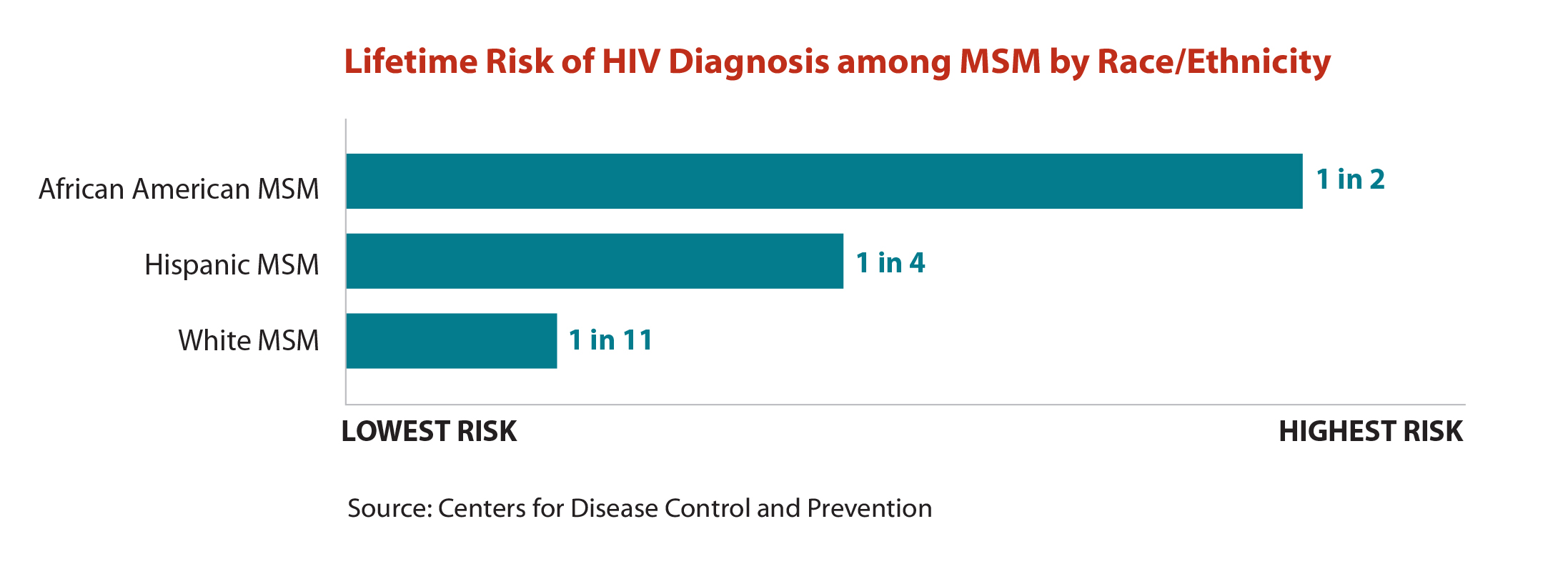
If current HIV diagnoses rates persist, about 1 in 2 black men who have sex with men (MSM) and 1 in 4 Latino MSM in the United States will be diagnosed with HIV during their lifetime, according to a new analysis by researchers at the Centers for Disease Control and Prevention (CDC).

The study, presented today at the Conference on Retroviruses and Opportunistic Infections in Bostonprovides the first-ever comprehensive national estimates of the lifetime risk of an HIV diagnosis for several key populations at risk and in every state.

croi_lifetime_risk_msm_race_ethnicity

“As alarming as these lifetime risk estimates are, they are not a foregone conclusion. They are a call to action,” said Jonathan Mermin, M.D., director of CDC’s National Center for HIV/AIDS, Viral Hepatitis, STD, and Tuberculosis Prevention. “The prevention and care strategies we have at our disposal today provide a promising outlook for future reductions of HIV infections and disparities in the U.S., but hundreds of thousands of people will be diagnosed in their lifetime if we don’t scale up efforts now.”

Read the full article on the CDC’s Website.


Gay/bi men are 2% of population but 67% of all new HIV infections in 2014

From Reuters Health

HIV still on the rise among gay menNew strategies to reduce risky sexual behaviors among young gay and bisexual men with human immunodeficiency virus may be needed to reduce new infections, according to a new study.

Researchers found that most young gay and bisexual men with HIV don’t have the virus suppressed by medication, making them more likely to infect others, and more than half reported recent unprotected sex.

While medications for HIV and access to those treatments improved over time, lead author Patrick Wilson said addressing unemployment, education and mental health is also important.

“I think we have to take a multipronged approach,” said Wilson, of the Columbia University Mailman School of Public Health in New York City.

Gay and bisexual men represent about 2 percent of the U.S. population, but accounted for about 67 percent of all people diagnosed with HIV in 2014, according to the HIV Surveillance Report released on Sunday by the Centers for Disease Control and Prevention (see Reuters Health story of December 6, 2015 here).

The steepest rise in HIV diagnoses between 2005 and 2014 was among young gay and bisexual men, with increases ranging from 56 percent among young white men to 87 percent among young black and Latino men.

Continue reading.

Vitamin D sufficiency may speed up immune recovery during HAART

From medicalnewstoday.com

vitimin D aids HARRTThere are an estimated 33 million people infected with HIV worldwide – 1.2 million of them in the US. The advent in 1996 of highly active antiretroviral therapy (HAART) – a combination of different classes of medications taken daily – means that for many patients who have access to the medication, what was once a fatal diagnosis can now be managed as a chronic disease.
For their study, Prof. Ezeamama and colleagues examined 18 months of data for 398 HIV-positive adults on HAART.

The data included a measure of participants’ vitamin D levels at the start of the trial (baseline) and their CD4 cell counts at months 0, 3, 6, 12 and 18.

In their analysis, the researchers looked at how the changes in CD4 cell counts related to the baseline levels of vitamin D over the study period.

They found that participants with sufficient levels of vitamin D at baseline recovered more of their immune function than participants with vitamin D deficiency.

Read the full story here.

University of Pittsburgh launching study to determine ways to promote health among aging gay and bisexual men

From NewsMedical.net

Dr Ron Stall at the University of Pittsburgh Grad School of Public Health

Dr Ron Stall at the University of Pittsburgh Grad School of Public Health

As the U.S. reaches an important milestone this year in the fight against HIV with more than half the people living with the virus older than age 50, the University of Pittsburgh Graduate School of Public Health is launching a study to determine ways to promote health among aging gay and bisexual men, who make up about two-thirds of the people aging with HIV.

In an effort to create strategies for use in public health outreach nationwide, the research team will be taking an innovative approach to the study by looking for protective factors – called “resiliencies” – that are helping keep some men with HIV healthy and could be extended to other men, rather than simply fixing health problems as they arise. This research is funded with a three-year, $2.1 million grant from the National Institutes of Health (NIH).

“We celebrate that medications now exist to enable people with HIV to live well into old age,” said study principal investigator Ron Stall, Ph.D., M.P.H., director of the Center for LGBT Health Research at Pitt Public Health. “But we also need to recognize that the health complications that come with aging – both mental and physical – are compounded when you’re living with HIV. It is critical that we develop research-based programs to support HIV-positive people as they age.”

Read the full article.

People with HIV are at higher risk of several types of cancer, large study finds

From aidsmap.com

People living with HIV remain at risk of AIDS-defining cancers in the era of effective antiretroviral therapy, and also have higher rates of several non-AIDS cancers than the general population, including lung, anal and liver cancer, according to findings from a study of more than 86,000 HIV-positive people published in the October 6 Annals of Internal Medicine.

Since the advent of effective combination antiretroviral therapy (ART) in the mid-1990s, rates of the three AIDS-defining cancers – Kaposi sarcoma, non-Hodgkin lymphoma and cervical cancer – have fallen among people with HIV. These cancers are caused by opportunistic viruses that can take hold when the immune system is damaged and CD4 T-cell counts are low, though human papillomavirus (HPV) also causes cervical and anal cancer in otherwise healthy people.

Most studies, however, have found that HIV-positive people have a higher overall risk for other non-AIDS-related cancers compared to HIV-negative populations, although data have been inconsistent about specific cancer types. In fact, cancer rates among people with HIV have risen over time as they live long enough to develop malignancies.

Michael Silverberg of Kaiser Permanente Northern California and fellow investigators evaluated trends in cumulative incidence of common cancer types by HIV status among participants in the large North American AIDS Cohort Collaboration on Research and Design (NA-ACCORD).

Read the full article.

Awareness of treatment’s impact on transmission is transforming the lives of couples of mixed HIV status

From aidsmap.com

A greater understanding of the impact of HIV treatment on prevention is changing the experience of being in a relationship with a partner of a different HIV status, according to a qualitative Australian study published last week in the Sociology of Health and Illness. A biomedical intervention appears to be having unexpected effects – loosening the association of serodiscordant relationships with ‘risk’ and helping couples to experience their relationships as normal and safe.

Asha Persson of the University of New South Wales reports that people’s views about treatment as prevention have changed significantly in recent years. She previously researched the topic in 2009, soon after the ‘Swiss Statement’ was issued. At that time, people in a relationship with a partner of a different HIV status often expressed scepticism or uncertainty about the idea that HIV treatment could make a person non-infectious. They did not always see the relevance of the information to their own lives.

But in her more recent interviews, conducted in 2013 and 2014, couples readily discussed the implications of having an undetectable viral load. HIV treatment appears to be transforming the social and sexual lives of people living with HIV and their partners.

The research specifically focuses on so-called ‘serodiscordant couples’, in other words those in which one person has HIV and the other does not. The public health literature on serodiscordant relationships typically focuses on the risk of HIV transmission and tends to see such a relationship as inherently problematic. In contrast, Persson found that her interviewees wanted to stress how normal and positive their relationships were, with HIV being seen as ‘no big deal’.

Read the full article on aidsmap.com.

Increasing levels of engagement with care is key to controlling HIV epidemic in US

From aidsmap.com

engagement with care key to controlling HIVTest-and-treat’ is unlikely to be an effective strategy to control the HIV epidemic in the United States without improvements in retention in care, investigators argue in the online edition of Clinical Infectious Diseases. A mathematical model suggested that without interventions to address poor levels of engagement in HIV care, there could be as many as 1.39 million new HIV infections in the US over the next 20 years, at a cost of $256 billion. Targeting testing and linkage would only prevent 21% of these new infections. But a package of interventions comprising testing, linkage and retention in care would prevent over half of the projected new infections, reduce AIDS-related mortality by almost two-thirds and be cost effective.

“To alter the course of the HIV epidemic in the United States, strategies of ‘test and treat’ alone may be insufficient; attention to the full continuum of care will be essential,” comment the authors.

United States guidelines recommend expanded HIV testing and antiretroviral therapy at any CD4 count as strategies to reduce rates of AIDS-related deaths and HIV transmissions. However, this approach may not be as effective as hoped. Recent research has shown that there is significant attrition at each stage of the HIV care continuum in the US. Up to a fifth of HIV-infected individuals are undiagnosed; 20% of recently diagnosed patients are not linked to care within 90 days; 54% of patients are not retained in care; only 30% of diagnosed patients have an undetectable viral load.

Continue reading.

Gonorrhea rising among gay and bi men

From aidsmeds.com

Diagnoses of gonorrhea among men who have sex with men are apparently rising in the United States. Centers for Disease Control and Prevention (CDC) researchers, in order to determine demographic information, interviewed a random sample of individuals diagnosed with the sexually transmitted infection (STI) in 12 areas across the country between 2010 and 2013. The researchers then used census and Gallup opinion polling data to estimate the respective sizes of the U.S. MSM, heterosexual male, and female populations by age group at the state, county and city levels.

In 2010, there were an estimated 1,169.7 diagnoses of gonorrhea per 100,000 MSM. In other words, about 1.17 percent of MSM contracted the STI that year. This rate rose 26 percent in three years, hitting 1,474.4 diagnoses per 100,000 MSM, or 1.47 percent, in 2013. Looking at MSM according to age bracket, those between 25 and 29 years of age  had the highest diagnosis rate: 3,400 per 100,000, or 3.4 percent.

During the study period, gonorrhea diagnosis rate among MSM was between 10.7 and 13.9 times higher than that of women or heterosexual men. While the researchers speculate that the rising gonorrhea rates may be indicative of a national trend, they caution that the data in this study is not nationally representative.

Read the full article.

Research shows structural barriers need to be addressed for PrEP to have an impact

From aidsmap.com

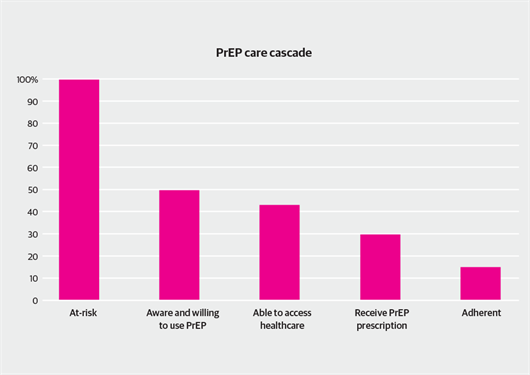
The uptake of PrEP in people who need it risks being limited due to low levels of awareness, gaps in health insurance, opaque bureaucratic procedures, under-usage of medical services, and limited awareness and skills in healthcare providers, according to an analysis published online ahead of print in Clinical Infectious Diseases. Also taking into account sub-optimal adherence among some PrEP users, the researchers conclude that just 15% of gay men in the American city of Atlanta who could benefit are likely to achieve protection from HIV with PrEP.

The PrEP care cascade

Colleen Kelley and colleagues at Emory University outline a ‘care cascade’ or ‘continuum of care’ for PrEP which identifies the key steps in the process of getting hold of PrEP and using it effectively. Analysis of the care cascade can help focus attention on where there are significant barriers to a person moving on to the next step.

Continue reading.